
Introduction
Choosing the right pot is just as important as choosing the right soil for your plants. The container affects drainage, moisture retention, root temperature, portability, and even how often you need to water. Among the most popular options, ceramic and terracotta pots are often compared because both are attractive, widely available, and suitable for a variety of indoor and outdoor plants.
However, ceramic pots and terracotta pots are not the same. Terracotta is a type of clay pot that is usually porous and unglazed, while ceramic pots are often glazed and less porous. These differences can significantly affect how the soil dries, how much maintenance a plant requires, and which types of plants grow best in each container.
For example, a succulent that prefers dry conditions may benefit from the breathability of a terracotta pot. A moisture-loving tropical plant, on the other hand, may perform better in a glazed ceramic pot that retains moisture for longer.
Understanding the differences between ceramic pots vs terracotta pots can help you select a container that matches both your plant’s needs and your gardening habits.
In this guide, you’ll learn how ceramic and terracotta pots compare in drainage, moisture retention, durability, weight, appearance, cost, and plant suitability.
Quick Answer
Terracotta pots are usually porous and allow soil to dry faster, making them an excellent choice for succulents, cacti, and plants that dislike excess moisture. Ceramic pots are often glazed, retain moisture longer, and are available in a wider range of colors and designs.
The best choice depends on your plant and growing conditions. Choose terracotta if you want better breathability and faster drying. Choose ceramic if you prefer greater moisture retention and decorative versatility.
Quick Comparison
| Feature | Ceramic Pots | Terracotta Pots |
|---|---|---|
| Porosity | Usually low when glazed | High |
| Moisture Retention | Higher | Lower |
| Drainage | Depends on drainage holes | Soil dries faster |
| Weight | Usually heavy | Moderate to heavy |
| Durability | Can be durable but may chip | Can crack or break |
| Appearance | Wide range of styles | Natural earthy appearance |
| Best For | Tropical and moisture-loving plants | Succulents and drought-tolerant plants |
Comparison Table
| Feature | Ceramic Pots | Terracotta Pots |
|---|---|---|
| Material | Fired clay, often glazed | Fired natural clay |
| Surface | Usually smooth | Usually rough and porous |
| Water Absorption | Low when glazed | High |
| Soil Drying Speed | Slower | Faster |
| Breathability | Lower | Higher |
| Available Designs | Very wide variety | More traditional styles |
| Indoor Use | Excellent | Excellent |
| Outdoor Use | Depends on frost resistance | Can crack in freezing conditions |
| Best for Beginners | Good for moisture-loving plants | Good for preventing overwatering |
| Maintenance | Easy to clean | May develop mineral stains |
What Are Ceramic Pots?
Ceramic pots are containers made from clay that has been shaped and fired at high temperatures. Many ceramic pots are finished with a glaze that creates a smooth, decorative, and relatively non-porous surface.
The glaze can come in many colors, patterns, and finishes, which makes ceramic one of the most popular materials for decorative houseplant pots.
Ceramic pots may vary significantly in quality and construction. Some are designed primarily as decorative cachepots, while others include drainage holes and are intended for direct planting.
The main characteristic of a glazed ceramic pot is its reduced porosity. Because the outer surface does not absorb much water, moisture remains in the potting mix for longer.
This can be beneficial for plants that prefer consistently moist soil.
Ceramic pots are commonly used for:
- Tropical houseplants
- Ferns
- Peace lilies
- Calatheas
- Philodendrons
- Decorative indoor plants
However, a ceramic pot can work for almost any plant if it has proper drainage and the soil mix matches the plant’s needs.
What Are Terracotta Pots?
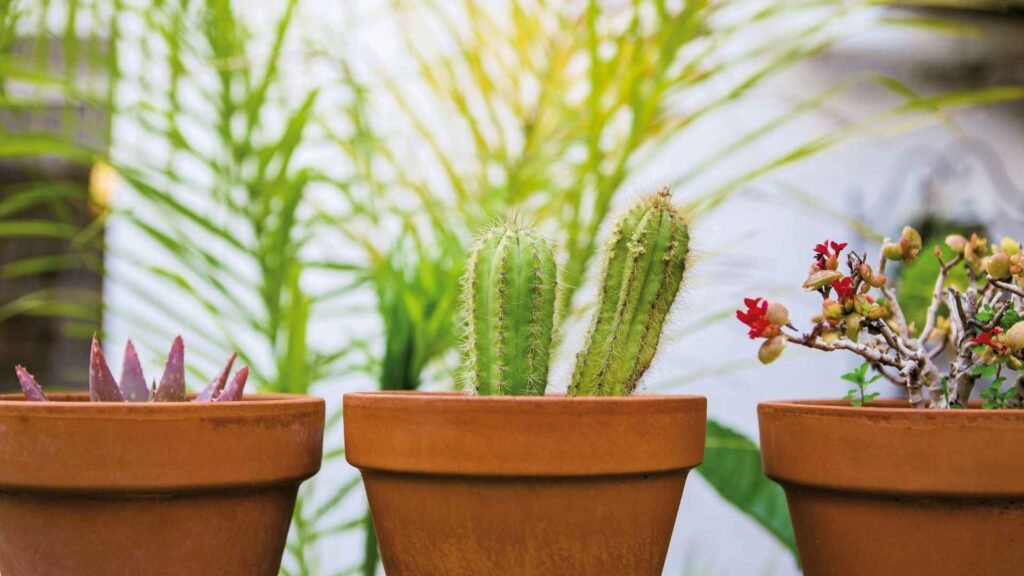
Terracotta pots are made from a specific type of porous clay. They are usually unglazed and have a natural orange, reddish-brown, or earthy appearance.
The word terracotta literally refers to fired earth, which describes the traditional clay material used to make these pots.
Unlike glazed ceramic, unglazed terracotta remains porous after firing. Water can slowly move through the walls of the pot and evaporate into the surrounding air.
This means the pot itself helps the growing medium dry more quickly.
Terracotta pots are especially popular for plants that prefer dry soil conditions.
They are commonly used for:
- Succulents
- Cacti
- Snake plants
- Aloe
- Jade plants
- Other drought-tolerant plants
Terracotta is also popular among gardeners who tend to overwater because its porous walls can help excess moisture evaporate more quickly.
The Main Difference Between Ceramic and Terracotta Pots
The biggest difference between ceramic pots and terracotta pots is porosity.
Most glazed ceramic pots have a sealed surface that limits water evaporation through the sides of the container. As a result, the soil tends to stay moist for longer.
Terracotta is naturally porous. Water and air can move through the pot walls, allowing moisture to evaporate and improving airflow around the root zone.
This difference affects several aspects of plant care.
With a ceramic pot, you may need to water less frequently because the soil retains moisture for longer.
With a terracotta pot, you may need to water more often, especially in warm, dry, or sunny conditions.
Neither option is automatically better. The right choice depends on the plant’s moisture requirements and your growing environment.
1. Moisture Retention
Moisture retention is one of the most important differences between ceramic and terracotta pots.
Glazed ceramic pots generally retain moisture for longer because the surface prevents significant water loss through the container walls.
This can be useful for plants that prefer consistently moist soil.
Terracotta absorbs some of the moisture from the soil and releases it through evaporation. As a result, the potting mix usually dries faster.
For plants that are sensitive to overwatering, this can be a major advantage.
However, plants growing in terracotta may require more frequent watering, particularly during hot weather or when placed under strong grow lights.
Winner:
- Ceramic for moisture retention
- Terracotta for faster drying
2. Drainage and Breathability
Both ceramic and terracotta pots can provide good drainage if they have proper drainage holes. However, terracotta provides an additional advantage because of its natural breathability.
The porous walls allow some air exchange around the root zone. This can help create a healthier environment for plants that prefer fast-draining conditions.
Ceramic pots rely more heavily on drainage holes and the quality of the potting mix because the glazed walls do not provide the same level of breathability.
For example, a ceramic pot without drainage holes can create a high risk of waterlogged soil if used for direct planting.
Terracotta can still cause root problems if it lacks drainage, but its porous material allows moisture to escape more easily than glazed ceramic.
For plants that need excellent aeration and fast drying, terracotta generally has the advantage.
Winner: Terracotta
3. Durability
Both ceramic and terracotta pots can last for many years when handled carefully, but they have different strengths and weaknesses.
Glazed ceramic pots are generally resistant to moisture absorption because their surface is sealed. High-quality ceramic can be very durable for indoor use, and the glazed finish is easy to wipe clean.
However, ceramic pots can chip or crack if they are dropped or struck against a hard surface. Large ceramic containers can also be difficult to move because of their weight.
Terracotta pots are also durable under normal conditions, but the porous clay can make them more vulnerable to cracking. Repeated exposure to freezing temperatures can be particularly damaging because absorbed moisture may expand as it freezes.
For indoor use, both materials can last a long time. For areas with freezing winters, frost-resistant ceramic or another weather-resistant material may be a safer choice.
Winner: Ceramic for general durability
4. Weight
Both ceramic and terracotta pots are heavier than plastic or fabric pots, but their weight can vary depending on size and thickness.
Ceramic pots are often quite heavy, especially when they have thick walls or a large decorative design. This can be an advantage for tall plants because the additional weight helps prevent the pot from tipping over.
However, heavy ceramic pots can be difficult to move once they are filled with soil and a mature plant.
Terracotta pots are also relatively heavy, but basic terracotta containers are often lighter than heavily glazed ceramic pots of a similar size.
For gardeners who frequently move plants, neither option is as convenient as lightweight plastic or fabric containers.
Winner: Terracotta for easier handling
5. Appearance and Design
Appearance is one area where ceramic pots have a clear advantage.
Ceramic pots are available in a huge range of:
- Colors
- Shapes
- Patterns
- Sizes
- Finishes
- Decorative styles
They can match modern, traditional, minimalist, colorful, or luxury interiors. This makes ceramic an excellent choice when the pot is an important part of your home décor.
Terracotta has a more traditional and natural appearance. Its warm orange and reddish-brown color works particularly well with rustic, Mediterranean, natural, and classic garden styles.
Although terracotta is available in different shapes and sizes, it generally offers fewer decorative options than glazed ceramic.
The best choice depends entirely on personal style.
Winner: Ceramic for design variety
6. Cost
Basic terracotta pots are usually among the most affordable types of plant containers.
Their simple design and widely available material make them a practical choice for gardeners with many plants.
Ceramic pots can range from affordable to expensive depending on:
- Size
- Glazing
- Design
- Brand
- Construction quality
Handmade or decorative ceramic containers can cost significantly more than standard terracotta pots.
If you need multiple pots for a large collection of plants, terracotta may be the more budget-friendly option.
Winner: Terracotta
7. Temperature Regulation
The material of a pot can affect the temperature around plant roots.
Terracotta has porous walls that allow moisture and air exchange. As water evaporates from the surface, it may provide a slight cooling effect in warm conditions.
This can be helpful for plants growing outdoors in hot environments, although rapid moisture loss can also mean more frequent watering.
Glazed ceramic does not allow the same level of evaporation through its surface. As a result, it generally retains moisture longer and provides a more stable root environment.
However, dark-colored ceramic pots placed in strong direct sunlight can absorb significant heat.
For indoor plants under normal conditions, the difference in temperature regulation is usually less important than proper watering, drainage, and light.
Winner: Depends on the growing environment
8. Maintenance and Cleaning
Glazed ceramic pots are generally easier to clean because their smooth surface can be wiped with a damp cloth.
Terracotta requires slightly more maintenance. Because it absorbs water and minerals, white mineral deposits may gradually appear on the outside of the pot.
This natural discoloration does not necessarily harm the plant, but some gardeners prefer to clean the pot occasionally to restore its original appearance.
Terracotta can also absorb salts from fertilizers and minerals from tap water. Over time, these deposits may become visible on the surface.
For easy cleaning and low maintenance, glazed ceramic is usually the better choice.
Winner: Ceramic
9. Plant Health and Root Growth
Both ceramic and terracotta pots can support healthy plants when used correctly.
The main difference comes from how they manage moisture around the roots.
Terracotta is especially useful for plants that need their potting mix to dry quickly. Its porous walls reduce the risk of constantly wet soil and can help gardeners avoid overwatering.
Ceramic pots are better suited to plants that prefer more consistent moisture. Because water does not evaporate significantly through glazed walls, the potting mix stays moist for longer.
Root health depends on several factors, including:
- Proper drainage holes
- Suitable potting soil
- Correct watering
- Appropriate pot size
- Plant species
The material of the pot is important, but it cannot compensate for poor soil or incorrect watering habits.
Winner: Depends on the plant
10. Indoor and Outdoor Use
Both ceramic and terracotta pots can be used indoors and outdoors, but the environment should influence your choice.
Ceramic pots are excellent for indoor spaces because they are decorative and easy to clean. When using them for direct planting, make sure they have drainage holes.
Terracotta also works well indoors and gives plants a natural, classic appearance. However, its porous surface may allow moisture to evaporate more quickly, which means watering may be needed more often.
For outdoor use, consider your local climate. Terracotta can crack during freezing conditions if it absorbs water and experiences repeated freeze-thaw cycles.
Some ceramic pots are also not frost-resistant, so always check whether a pot is designed for outdoor use before leaving it outside year-round.
Winner: Ceramic for indoor decoration; depends on climate for outdoor use
Which Plants Are Best for Ceramic Pots?
Ceramic pots are a good choice for plants that benefit from more consistent moisture.
They can work particularly well for:
- Peace lilies
- Ferns
- Calatheas
- Philodendrons
- Monstera
- Anthuriums
- Other tropical houseplants
These plants can still suffer from overwatering, so a ceramic pot should always have drainage holes and a suitable potting mix.
Ceramic pots can also work well for succulents and other drought-tolerant plants when the soil is fast-draining and watering is carefully controlled.
Which Plants Are Best for Terracotta Pots?
Terracotta is particularly suitable for plants that prefer their roots to dry between waterings.
Good options include:
- Cacti
- Succulents
- Aloe vera
- Jade plants
- Snake plants
- Some herbs
- Other drought-tolerant plants
Because terracotta allows moisture to evaporate through its walls, it can help reduce the risk of prolonged wet soil.
However, plants in terracotta may need more frequent watering, especially under strong grow lights or in warm indoor environments.
Which Is Better: Ceramic Pots or Terracotta Pots?
The best choice depends on your plant’s needs, your watering habits, and the environment where the plant is growing.
Choose ceramic pots if:
- Your plant prefers consistently moist soil.
- You want a decorative container with more color and design options.
- You prefer a smooth, easy-to-clean surface.
- You do not want the potting mix to dry too quickly.
- The plant will mainly be kept indoors.
Choose terracotta pots if:
- Your plant prefers dry or fast-draining soil.
- You tend to overwater your plants.
- You are growing succulents, cacti, or other drought-tolerant plants.
- You prefer a natural and traditional appearance.
- You want a more affordable pot for multiple plants.
For many indoor gardeners, both types of pots can be useful. You might use terracotta for succulents and ceramic pots for moisture-loving tropical plants.
Pros and Cons of Ceramic Pots
Pros
- Retain moisture for longer
- Available in many colors and designs
- Easy to clean
- Excellent for decorative indoor spaces
- Heavy enough to support larger plants
- Suitable for many moisture-loving plants
Cons
- Can be expensive
- Heavy and difficult to move
- May chip or crack if dropped
- Can contribute to overwatering if drainage is poor
- Not all ceramic pots are suitable for freezing temperatures
Pros and Cons of Terracotta Pots
Pros
- Naturally porous and breathable
- Helps soil dry faster
- Excellent for succulents and cacti
- Usually affordable
- Classic and natural appearance
- Can help gardeners who tend to overwater
Cons
- Requires more frequent watering
- Can develop mineral stains
- May crack in freezing conditions
- Limited color and design options
- Can break if dropped
Do Ceramic and Terracotta Pots Need Drainage Holes?
Yes, drainage holes are important for most plants.
Even though terracotta is porous, its walls alone cannot remove enough excess water to prevent problems caused by consistently saturated soil.
A drainage hole allows excess water to escape from the bottom of the container and helps reduce the risk of root rot.
When choosing either ceramic or terracotta pots, look for containers with at least one suitable drainage hole.
If you have a decorative ceramic pot without drainage, you can use it as a cachepot. Place your plant inside a smaller nursery pot with drainage holes, then remove it when watering and allow excess water to drain before placing it back inside.
Common Mistakes to Avoid
Choosing a Pot Based Only on Appearance
A beautiful pot may not always be the best choice for your plant.
Before choosing a container, consider how quickly the soil should dry, whether the pot has drainage holes, and how large the root system will become.
Using Terracotta for a Plant That Needs Constant Moisture
Terracotta can cause soil to dry quickly, particularly in warm rooms or under strong grow lights.
Plants that prefer consistently moist conditions may require much more frequent watering in terracotta.
Overwatering Plants in Ceramic Pots
Because glazed ceramic pots retain moisture for longer, gardeners may accidentally water too frequently.
Always check the soil before watering instead of following a fixed schedule.
Ignoring Pot Size
The material is important, but the size of the pot also affects plant health.
A container that is too large can hold excessive moisture around a small root system. A pot that is too small can restrict root growth and cause the soil to dry extremely quickly.
Choose a pot that provides enough room for healthy root growth without being excessively oversized.
Forgetting About Weight
Large ceramic and terracotta pots can become extremely heavy once filled with soil and water.
Consider where the plant will be placed before choosing a large container, especially on shelves, balconies, or surfaces with weight limitations.
Frequently Asked Questions
Are ceramic pots better than terracotta pots?
Neither is automatically better. Ceramic pots are generally better for plants that prefer more consistent moisture, while terracotta is often better for plants that prefer fast-draining soil.
Are terracotta pots good for indoor plants?
Yes. Terracotta pots can be excellent for indoor plants, particularly succulents, cacti, snake plants, and other plants that prefer the soil to dry between waterings.
Do plants need more water in terracotta pots?
Usually, yes. Because terracotta is porous, moisture can evaporate through the walls of the pot. Plants may need more frequent watering compared with similar plants grown in glazed ceramic containers.
Are ceramic pots good for succulents?
Ceramic pots can work well for succulents if they have drainage holes and contain a fast-draining potting mix. However, terracotta is often easier for beginners because it helps the soil dry more quickly.
Why do terracotta pots turn white?
Terracotta can develop white deposits when minerals and salts from water or fertilizer move through the porous clay and remain on the surface after moisture evaporates.
These deposits are usually harmless and can be cleaned if desired.
Can ceramic pots be used outdoors?
Some ceramic pots are suitable for outdoor use, but not all are frost-resistant. Check the manufacturer’s information before leaving a ceramic pot outside during freezing temperatures.
Final Thoughts
When comparing ceramic pots vs terracotta pots, the most important difference is how each material manages moisture.
Terracotta is porous and breathable, allowing the potting mix to dry faster. This makes it an excellent choice for succulents, cacti, and plants that are sensitive to overwatering.
Ceramic pots, especially glazed ceramic, retain moisture for longer and offer a much wider range of decorative designs. They can be an excellent choice for tropical houseplants and other plants that prefer more consistent moisture.
The right choice ultimately depends on your plant and your growing conditions. A gardener who frequently overwaters may find terracotta easier to manage, while someone growing moisture-loving plants may prefer ceramic.
Whichever material you choose, remember that proper drainage, an appropriate potting mix, correct pot size, and careful watering habits are just as important as the pot itself.