Introduction
Choosing the right soil is one of the most important decisions you can make for healthy plants. However, many beginners assume that all soil products are basically the same. Potting soil and garden soil may look similar at first, but they are designed for very different growing environments.
Using the wrong type of soil can lead to problems such as poor drainage, compacted roots, slow growth, nutrient deficiencies, and overwatering. For example, garden soil may work well in an outdoor planting bed but can become too dense and compact when placed inside a container. Potting soil, on the other hand, is specially formulated to provide the drainage, airflow, and moisture balance that container-grown plants need.
Understanding the differences between potting soil vs garden soil will help you choose the right growing medium for indoor plants, outdoor containers, raised beds, and in-ground gardens.
In this guide, you’ll learn what each type of soil is, how they differ, and which option is best for different gardening situations.
Quick Answer
Potting soil is designed primarily for containers and potted plants, while garden soil is intended for use in outdoor gardens and landscape beds.
Potting soil is usually lighter and provides better drainage and airflow around plant roots. Garden soil is generally heavier and works best when mixed with existing outdoor soil.
As a general rule, use potting soil for pots, containers, and most indoor plants, and use garden soil for in-ground gardens, raised beds, and outdoor landscaping projects.
Quick Comparison
| Feature | Potting Soil | Garden Soil |
|---|---|---|
| Best Use | Containers and pots | In-ground gardens |
| Texture | Light and loose | Heavier and denser |
| Drainage | Excellent | Moderate |
| Airflow | High | Lower |
| Moisture Retention | Balanced | Higher |
| Indoor Use | Excellent | Usually unsuitable |
| Outdoor Beds | Can be used in mixes | Excellent |
| Root Growth | Excellent for containers | Best in natural soil environments |
Comparison Table
| Feature | Potting Soil | Garden Soil |
|---|---|---|
| Designed For | Containers | Garden beds |
| Weight | Lightweight | Heavy |
| Drainage | Good to excellent | Moderate |
| Aeration | High | Lower |
| Compaction Risk | Low | Higher in containers |
| Ingredients | Organic materials and amendments | Natural soil and organic matter |
| Suitable for Houseplants | Yes | Generally no |
| Suitable for Raised Beds | Sometimes | Yes |
| Reusability | Limited with amendments | Often improved and reused |
What Is Potting Soil?
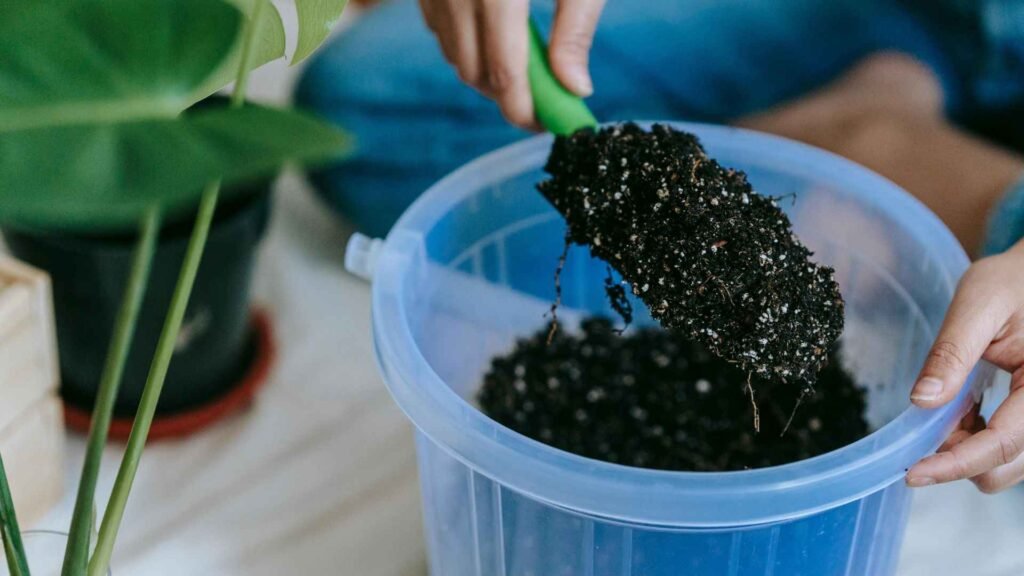
Potting soil is a specially prepared growing medium designed for plants grown in containers. Despite its name, many potting soil mixes do not contain much natural mineral soil at all.
Instead, they are commonly made from ingredients that help create a loose and well-draining environment around plant roots.
Common ingredients may include:
- Peat moss
- Coco coir
- Perlite
- Vermiculite
- Compost
- Bark
- Organic matter
- Slow-release fertilizers
The exact formula varies between brands and products. Some mixes are designed for general houseplants, while others are formulated specifically for succulents, orchids, vegetables, or seedlings.
The main purpose of potting soil is to create a balanced environment that provides moisture while also allowing excess water to drain away. This is especially important in containers because plant roots are surrounded by a limited amount of growing medium.
A quality potting mix should provide three essential benefits: water retention, drainage, and aeration.
Why Potting Soil Works Well in Containers
Plants growing in pots face different conditions than plants growing directly in the ground.
In a garden, plant roots can spread outward and downward into a large volume of soil. Water can also move through multiple layers of soil.
Inside a container, roots are restricted to a limited space. If the soil becomes compacted or remains waterlogged, roots may struggle to access oxygen.
Potting soil helps prevent this problem by maintaining a loose structure. Ingredients such as perlite and bark create air pockets that allow oxygen to reach the roots.
This makes potting soil an excellent choice for:
- Houseplants
- Indoor gardens
- Balcony containers
- Patio planters
- Herbs
- Seedlings
- Container vegetables
What Is Garden Soil?
Garden soil is a soil product designed to improve and support plants growing directly in the ground.
It usually contains a combination of natural topsoil, compost, organic matter, and other materials that improve the structure and fertility of existing garden soil.
Garden soil is generally heavier than potting soil because it contains more mineral particles such as sand, silt, and clay.
This heavier structure is not necessarily a disadvantage when used outdoors. In an in-ground garden, natural drainage, soil organisms, earthworms, and deeper soil layers all contribute to a healthier growing environment.
Garden soil is commonly used for:
- Flower beds
- Vegetable gardens
- Landscape planting
- Shrubs
- Trees
- Raised beds
It is often intended to be mixed with existing soil rather than used as the only growing medium.
Why Garden Soil Can Be a Problem in Pots
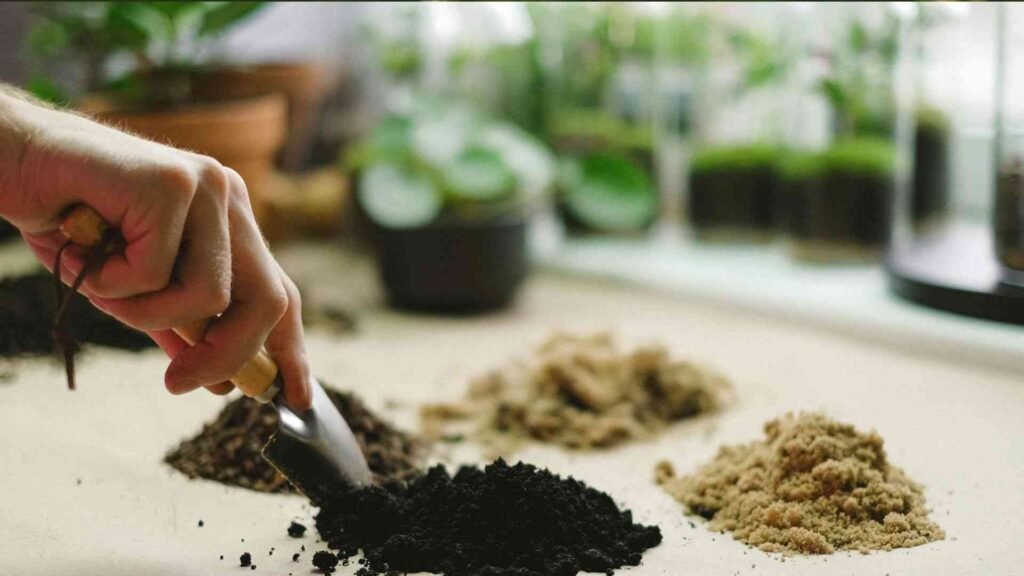
Garden soil may work perfectly in an outdoor bed but cause problems inside containers.
Because it is heavier and denser, garden soil can become compacted when placed in a pot. Compaction reduces the amount of air around the roots and can slow drainage.
This may lead to:
- Waterlogged soil
- Root rot
- Slow plant growth
- Poor nutrient uptake
- Weak root systems
For this reason, garden soil should generally not be used by itself in houseplant pots or other containers.
The Main Difference Between Potting Soil and Garden Soil
The biggest difference is their intended purpose.
Potting soil is formulated for the restricted environment of a container. It focuses on drainage, aeration, and maintaining a lightweight structure.
Garden soil is designed to work with natural soil in outdoor environments. It is heavier and can support long-term soil improvement when mixed into garden beds.
This difference affects almost every aspect of plant growth, including how water moves through the soil, how much oxygen reaches the roots, and how easily roots can expand.
Understanding these differences is essential before choosing a soil product for your plants.
1. Drainage
Drainage is one of the most important differences between potting soil and garden soil.
Potting soil is usually formulated with lightweight materials such as perlite, bark, or coco coir that create spaces for water to move through the growing medium.
This allows excess water to drain while retaining enough moisture for the plant.
Garden soil generally has a denser structure. When placed in a container, it can hold too much water and drain more slowly.
For potted plants, better drainage usually makes potting soil the better choice.
Winner: Potting Soil
2. Aeration
Plant roots need oxygen as well as water and nutrients.
Potting soil is designed to maintain air pockets around the root zone. This improves oxygen availability and supports healthy root development.
Garden soil can become compacted more easily inside a container, reducing airflow around the roots.
In an outdoor garden, this is less of a problem because natural soil systems have more space, biological activity, and deeper drainage.
However, for containers and indoor plants, potting soil provides significantly better aeration.
Winner: Potting Soil
3. Moisture Retention
Both types of soil can retain moisture, but they do so differently.
Potting soil is designed to balance moisture retention with drainage. Ingredients such as peat moss and coco coir can hold water while perlite and bark help prevent excessive waterlogging.
Garden soil may retain moisture for longer because of its denser structure and mineral content.
This can be beneficial in an outdoor garden, especially when the soil is well-balanced. However, excessive moisture retention can become a problem in pots.
The best choice depends on where the plant is growing, but potting soil generally offers better moisture control for containers.
Winner: Potting Soil for Containers
4. Weight and Texture
Potting soil is generally much lighter than garden soil. This is one of the main reasons it works so well in containers.
A lightweight growing medium makes it easier for roots to spread throughout the pot. It also makes containers easier to move, which is especially useful for indoor plants, balcony gardens, and large patio planters.
Garden soil is usually heavier because it contains natural mineral particles such as sand, silt, and clay. This weight can be beneficial when plants are growing directly in the ground, but it becomes a disadvantage inside containers.
Heavy soil can compress under its own weight, particularly after repeated watering. As the soil becomes compacted, water drains more slowly and less oxygen reaches the roots.
For containers, potting soil has a clear advantage because of its lighter texture.
Winner: Potting Soil
5. Nutrient Content
Both potting soil and garden soil can contain nutrients, but the source and availability of those nutrients may differ.
Many commercial potting soils include added fertilizers or nutrient-rich organic materials. Some products contain slow-release fertilizer designed to feed plants for several weeks or months.
However, not every potting mix contains fertilizer. Some mixes are intentionally designed without added nutrients so gardeners can control fertilization themselves.
Garden soil often contains compost, topsoil, manure, and other organic materials that contribute nutrients and improve soil fertility.
When used in a healthy outdoor garden, these materials also support beneficial microorganisms that help recycle nutrients over time.
The nutrient content of either product can vary significantly between brands, so it is important to read the product label before purchasing.
Winner: Depends on the Product
6. Root Development
Healthy roots need a combination of moisture, nutrients, and oxygen.
Potting soil is specifically designed to support root development in restricted spaces. Its loose structure allows roots to move through the growing medium while maintaining access to air.
This is particularly important for indoor plants and container-grown vegetables, where roots cannot expand beyond the walls of the pot.
Garden soil works differently. In an outdoor environment, roots can spread into surrounding soil and benefit from natural biological activity.
However, when garden soil is placed inside a container, compaction can restrict root growth.
For plants growing in pots, potting soil generally provides a better environment for healthy root development.
Winner: Potting Soil for Containers
7. Compaction
Compaction occurs when soil particles become tightly packed together.
This reduces the spaces between particles where air and water normally move. Compacted soil can make it difficult for roots to grow and may lead to poor drainage.
Potting soil is designed to resist compaction. Ingredients such as perlite, bark, and coco coir help maintain a loose structure over time.
Garden soil is more likely to compact when used in containers, particularly if it contains a high percentage of clay or fine particles.
In an outdoor garden, gardeners can improve compaction by adding compost, organic matter, and other soil amendments.
For container gardening, however, potting soil is the better choice.
Winner: Potting Soil
8. Cost
Garden soil is often less expensive when you need a large amount of growing medium for an outdoor garden.
Because it is heavier and frequently used in bulk, it can be a more economical choice for filling large garden beds and improving existing soil.
Potting soil is usually more expensive because it contains specially selected ingredients designed to provide good drainage, moisture retention, and aeration.
For a few houseplants or containers, the higher cost of potting soil is usually worthwhile. However, filling a large outdoor garden entirely with premium potting mix can become expensive.
For large-scale outdoor projects, garden soil is generally the more budget-friendly option.
Winner: Garden Soil
9. Indoor and Outdoor Use
Potting soil is highly versatile and can be used both indoors and outdoors, particularly in containers.
It is ideal for:
- Houseplants
- Indoor herbs
- Patio containers
- Balcony gardens
- Hanging baskets
- Container vegetables
- Seed starting mixes designed for young plants
Garden soil is primarily intended for outdoor use.
It works best for:
- Flower beds
- Vegetable gardens
- Landscape plants
- Trees and shrubs
- Improving existing soil
- Many raised-bed applications
Using garden soil indoors is generally not recommended because it may compact easily and can introduce insects, weed seeds, or other unwanted materials depending on the product and source.
Winner: Potting Soil for Versatility
10. Best Use for Raised Beds
Raised beds are slightly different from both traditional containers and in-ground gardens.
They contain a larger volume of soil than pots, but their soil is still enclosed and should provide good drainage and aeration.
Garden soil can be used in raised beds, particularly when mixed with compost and other amendments.
Potting soil can also be added to improve texture, but using only potting soil in a large raised bed may be unnecessarily expensive.
A quality raised-bed soil mix is often the best option because it is specifically formulated for this type of growing environment.
For large raised beds, a combination of garden soil, compost, and other organic materials can provide an effective and economical growing medium.
Winner: Depends on the Raised-Bed Soil Mix
When Should You Use Potting Soil?
Potting soil is the best choice when plants are growing in a limited container environment.
Use potting soil for:
- Indoor plants
- Houseplants
- Container vegetables
- Herbs in pots
- Hanging baskets
- Patio planters
- Balcony gardens
- Most decorative containers
You should also consider choosing a specialized potting mix based on your plant type.
For example:
- Succulents and cacti benefit from fast-draining mixes.
- Orchids need chunky, highly aerated growing media.
- Seedlings perform best in fine, lightweight seed-starting mixes.
- Moisture-loving tropical plants may benefit from mixes containing coco coir or other moisture-retaining materials.
Choosing a soil mix designed for your specific plant can improve drainage, root development, and overall growth.
When Should You Use Garden Soil?
Garden soil is best suited for plants growing directly outdoors.
Use garden soil for:
- Vegetable gardens
- Flower beds
- Landscaping
- Shrubs
- Trees
- Improving existing outdoor soil
- Large gardening projects
Before adding garden soil to an existing bed, consider the condition of the current soil.
If your garden already has poor drainage, heavy clay, or low organic matter, simply adding more garden soil may not completely solve the problem.
Compost and other amendments can help improve soil structure and fertility over time.
Can You Mix Potting Soil and Garden Soil?
Yes, potting soil and garden soil can be mixed in certain gardening situations.
For example, adding some potting soil to a raised bed may improve aeration and water management. Garden soil can also be mixed with compost and other ingredients to create a more balanced growing medium.
However, mixing garden soil into a container does not automatically make it suitable for potted plants.
If the final mixture remains heavy and compact, roots may still struggle to access oxygen.
For most indoor plants and containers, using a quality potting mix specifically designed for containers remains the safer option.
Which Is Better: Potting Soil or Garden Soil?
Neither potting soil nor garden soil is universally better. The right choice depends mainly on where your plants are growing.
If you are growing plants in pots, containers, hanging baskets, or indoor planters, potting soil is usually the better choice. Its lightweight structure provides the drainage and aeration that container-grown roots need.
If you are planting directly into an outdoor garden bed or improving existing soil, garden soil is usually more appropriate. It is designed to work with natural soil and can help improve fertility and structure.
The simplest rule is:
- Use potting soil for containers
- Use garden soil for in-ground gardens
- Use a specialized raised-bed mix for raised beds when possible
Choosing the right growing medium from the beginning can prevent many common problems, including poor drainage, root rot, and slow plant growth.
Pros and Cons of Potting Soil
Pros
- Lightweight and easy to handle
- Provides excellent drainage
- Improves airflow around roots
- Resists compaction
- Ideal for containers and indoor plants
- Available in specialized mixes for different plant types
Cons
- Usually more expensive than garden soil
- May dry out faster than heavier soil
- Nutrients can become depleted over time
- Large amounts can be costly for outdoor projects
Pros and Cons of Garden Soil
Pros
- Suitable for outdoor gardens
- Often more affordable for large projects
- Can improve existing soil
- Contains natural minerals and organic matter
- Useful for garden beds, trees, and shrubs
Cons
- Too heavy for most containers
- Can become compacted in pots
- Usually provides less aeration than potting soil
- May drain poorly in enclosed containers
- Not generally recommended for houseplants
Common Mistakes to Avoid
Choosing the right soil is important, but avoiding common mistakes is equally essential.
Using Garden Soil for Houseplants
One of the most common mistakes is filling a houseplant pot with soil taken directly from an outdoor garden.
Natural garden soil can become dense and compact inside a container. It may also contain weed seeds, insects, or microorganisms that are not desirable indoors.
A quality potting mix is generally a safer and more suitable choice.
Assuming All Potting Soil Is the Same
Not every potting mix is suitable for every plant.
A heavy moisture-retaining mix may work well for tropical plants but cause problems for succulents. Likewise, an orchid requires a much chunkier growing medium than a typical houseplant.
Always consider your plant’s specific needs.
Ignoring Drainage
Even the best potting soil cannot completely compensate for a container without drainage.
Make sure your pot has adequate drainage holes so excess water can escape.
Forgetting to Replace or Refresh Old Potting Soil
Potting soil gradually breaks down over time. As organic materials decompose, the mix can become denser and lose some of its ability to provide drainage and aeration.
Refreshing or replacing old potting soil can help maintain healthy growing conditions.
Using Potting Soil for Every Outdoor Project
Potting soil works well in containers, but using premium potting mix to fill a large outdoor garden bed can be unnecessarily expensive.
For large garden areas, garden soil, compost, and appropriate soil amendments are often more practical.
Frequently Asked Questions
Can I use garden soil instead of potting soil?
Garden soil can be used for outdoor garden beds, but it is generally not recommended as a direct replacement for potting soil in containers.
Its heavier texture may cause compaction and poor drainage, which can affect root health.
Can I use potting soil in my garden?
Yes, potting soil can be added to outdoor garden beds to improve texture and organic matter. However, it may be more expensive than garden soil or compost when used in large quantities.
Is potting soil better for indoor plants?
Yes. Potting soil is generally better for indoor plants because it provides the lightweight structure, drainage, and aeration needed in containers.
For best results, choose a potting mix appropriate for your specific plant type.
Can garden soil be used in raised beds?
Yes. Garden soil can be used in raised beds, especially when combined with compost and other materials that improve drainage and soil structure.
However, a dedicated raised-bed soil mix may provide better results for some plants.
Does potting soil contain real soil?
Not always. Many commercial potting mixes contain little or no natural mineral soil.
Instead, they use materials such as peat moss, coco coir, perlite, bark, and compost to create a lightweight growing medium.
How often should potting soil be replaced?
There is no single schedule that works for every plant. However, many container gardeners refresh or replace part of the potting mix when repotting, especially if the old mix has become compacted or depleted.
Healthy, reusable material can sometimes be refreshed with compost or other amendments rather than completely discarded.
Final Thoughts
The main difference between potting soil vs garden soil comes down to where the plants will grow.
Potting soil is designed for containers, where roots need excellent drainage, airflow, and a lightweight structure. This makes it the best choice for most houseplants, indoor gardens, patio containers, and other potted plants.
Garden soil is designed for outdoor environments and works best when used in garden beds or mixed with existing soil. Its heavier texture and natural mineral content can support healthy outdoor gardens but may create drainage and compaction problems inside containers.
Before choosing either option, think about your growing environment and the needs of your plant. Using the right soil can improve root development, water management, nutrient availability, and overall plant health.
For most indoor and container gardeners, the answer is simple: choose a quality potting mix. For outdoor garden beds and large landscaping projects, garden soil is usually the more practical and economical choice.