
Self Watering Pots
Self-watering pots are designed to make plant care easier by providing a more consistent supply of moisture. Instead of pouring water directly onto the soil every time, you fill a built-in reservoir that gradually supplies moisture to the plant’s roots.
These pots can be especially useful for indoor plants, herbs, vegetables, and other plants that prefer consistently moist growing conditions. However, they are not suitable for every plant. Some plants need their soil to dry between waterings, making a constantly moist growing environment unsuitable.
Understanding how self-watering pots work, which plants benefit from them, and how to maintain them properly can help you decide whether they are worth using.
Quick Answer: What Are Self-Watering Pots?
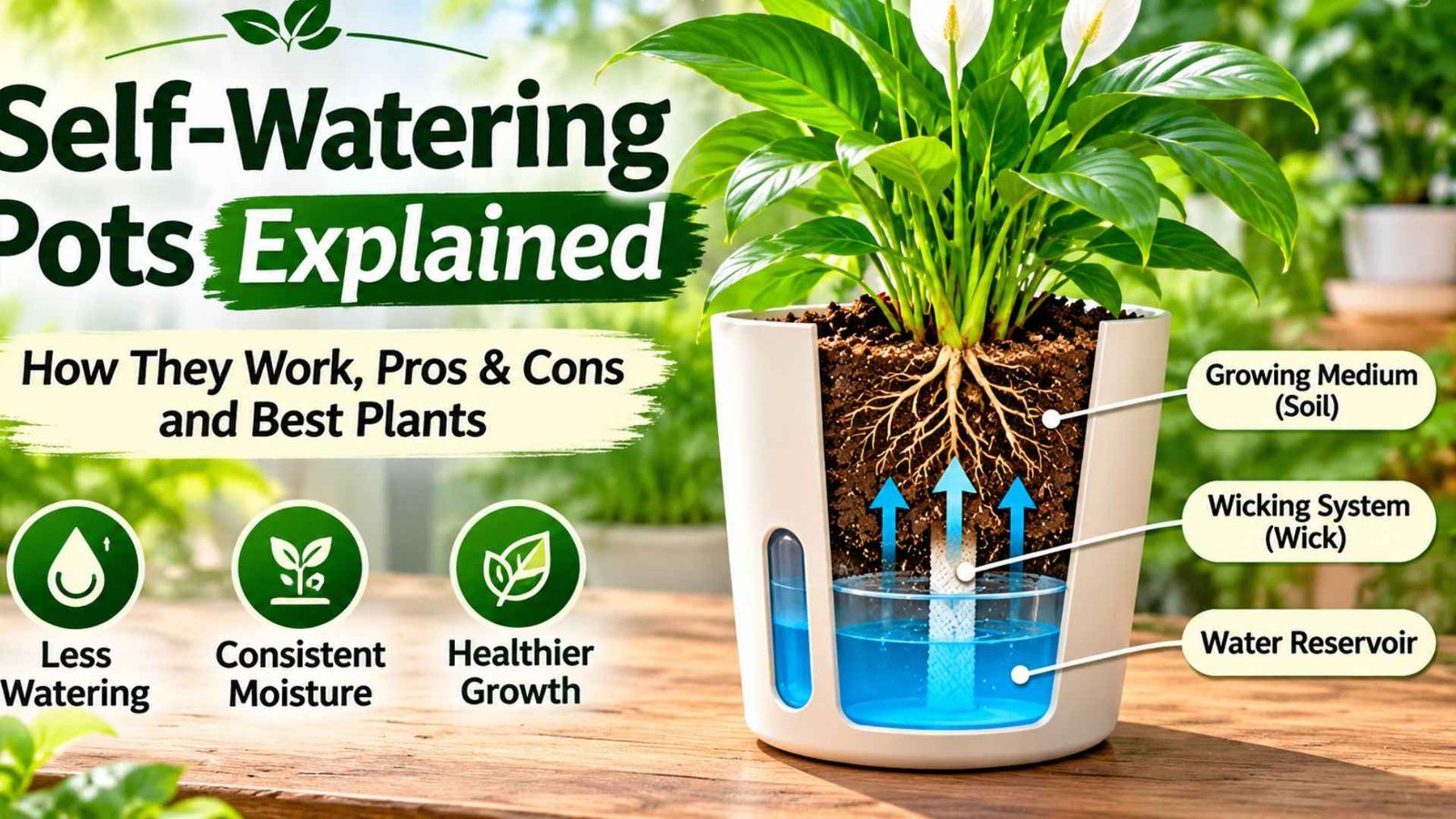
Self-watering pots are containers with a built-in water reservoir beneath the growing medium. Water travels upward from the reservoir through a wick or a column of growing medium by capillary action, supplying moisture to the roots.
They reduce the need for frequent manual watering and help maintain more consistent soil moisture. However, they still require monitoring and refilling.
They work particularly well for plants that prefer evenly moist soil, such as many herbs, leafy vegetables, and moisture-loving houseplants. They are generally less suitable for cacti, succulents, and plants that need their growing medium to dry thoroughly between waterings.
Self-Watering Pots at a Glance
| Feature | Self-Watering Pots | Traditional Pots |
|---|---|---|
| Watering method | Reservoir supplies water from below | Water is added from above |
| Water storage | Built-in reservoir | Usually no separate reservoir |
| Soil moisture | More consistent when properly set up | Depends on watering frequency |
| Watering frequency | Usually less frequent | Often requires more frequent attention |
| Maintenance | Reservoir checks and occasional flushing | Regular watering and drainage checks |
| Best for | Plants that prefer steady moisture | A wider range of plant types |
| Main disadvantage | Not suitable for every plant | Soil can dry out between waterings |
How Do Self-Watering Pots Work?
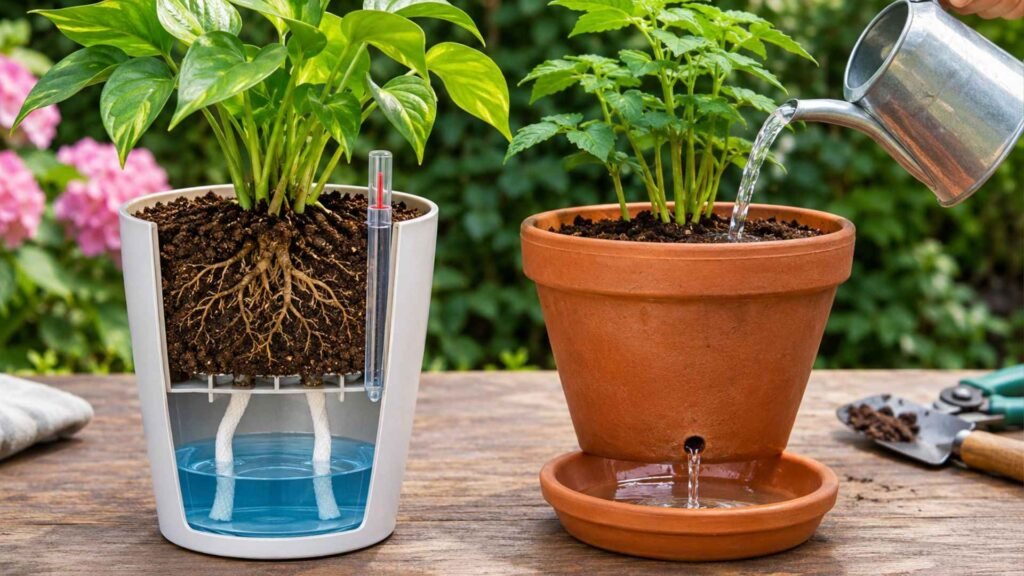
A self-watering pot uses a simple watering system that moves moisture from a lower reservoir into the growing medium. The process relies on capillary action, which allows water to travel through small spaces in materials such as soil and absorbent wicks.
Most designs contain several important components.
1. Water Reservoir
The reservoir is the lower section of the pot that stores water. Depending on the design, it may be built into the bottom of the container or formed by an inner pot sitting inside an outer container.
You refill this reservoir when the water level becomes low.
2. Wick or Wicking Platform
A wick, absorbent strip, or column of growing medium connects the water reservoir to the soil.
It draws water upward through capillary action, allowing moisture to reach the growing medium without pouring water directly onto its surface.
Some self-watering pots use fabric wicks, while others use specially designed platforms or soil-filled openings.
3. Growing Medium
The growing medium supports the plant and holds the moisture supplied by the reservoir.
It needs to absorb and distribute water effectively while maintaining enough air space for healthy roots. A suitable, well-structured potting mix is therefore important.
4. Fill Tube
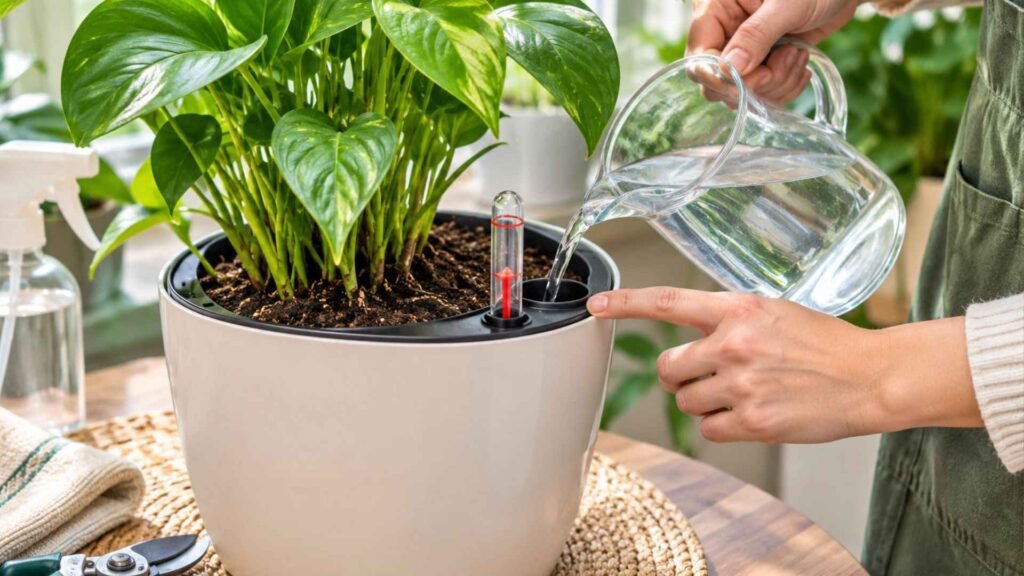
Many designs include a fill tube that allows you to add water directly to the reservoir without disturbing the plant or soaking the soil surface.
5. Overflow Opening
Some self-watering pots include an overflow opening that allows excess water to escape once the reservoir reaches its intended maximum level.
This helps prevent the reservoir from filling beyond its designed capacity. It does not eliminate every risk of overwatering or poor root aeration.
Benefits of Self-Watering Pots
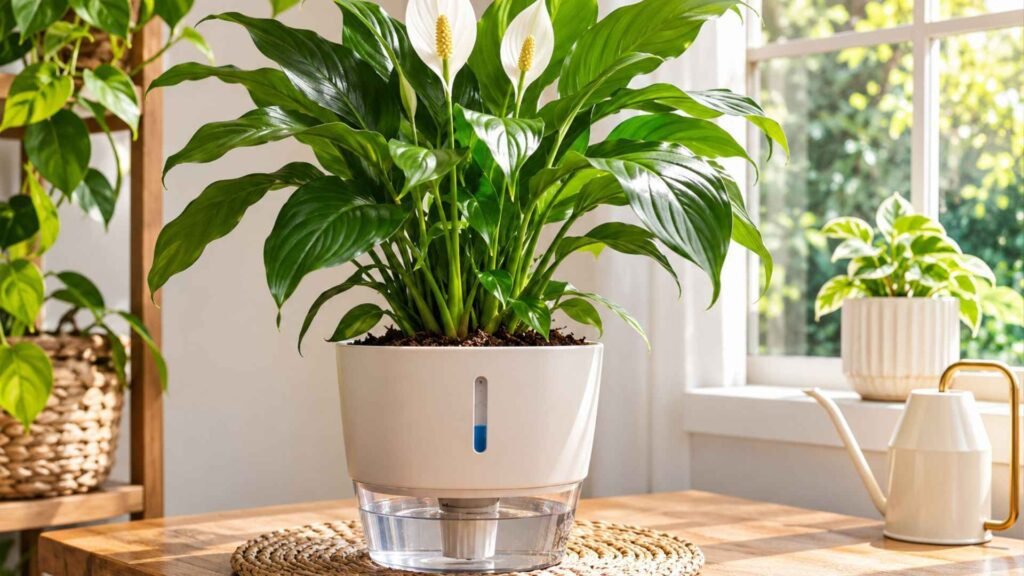
Self-watering pots offer several advantages when matched with suitable plants and growing conditions.
1. More Consistent Soil Moisture
Plants that prefer steady moisture can benefit from a more consistent supply of water. The reservoir reduces the repeated drying and rewetting that may happen when watering is irregular.
2. Less Frequent Manual Watering
Because the reservoir stores additional water, you may not need to water as frequently as with a traditional pot.
This can be helpful for busy plant owners or people who sometimes forget their watering routine.
3. Convenient for Indoor Plants
Self-watering pots can make indoor plant care easier, particularly for plants that are difficult to move to a sink or watering area.
They also allow you to refill the reservoir without pouring water over furniture or nearby surfaces.
4. Useful for Herbs and Vegetables
Many herbs and leafy vegetables grow well when their growing medium remains consistently moist without becoming waterlogged.
A properly designed self-watering container can make it easier to maintain those conditions.
5. Reduced Water Loss
Bottom-up watering can reduce some surface evaporation and runoff compared with certain top-watering situations. The actual water savings depend on the pot design, plant size, climate, and watering practices.
Disadvantages of Self-Watering Pots
Although convenient, self-watering pots also have limitations.
1. Not Suitable for Every Plant
Some plants need their growing medium to dry between watering sessions. Keeping these plants continuously moist can increase the risk of root problems.
Cacti and many succulents are examples of plants that generally prefer a drier growing environment.
2. Reservoirs Require Monitoring
A self-watering pot does not create its own water supply. You must still check the reservoir and refill it when necessary.
The refill interval depends on the reservoir size, plant growth, temperature, light, and humidity.
3. Salt Buildup Can Occur
When water moves upward through the growing medium, dissolved fertilizer salts can accumulate over time.
Occasional top watering with clean water, allowing excess water to drain away, can help flush out accumulated salts.
4. Poor Soil Can Reduce Performance
A dense or unsuitable growing medium may stay too wet or fail to distribute water properly.
Choosing a suitable potting mix is essential for maintaining both moisture and root aeration.
5. They Can Cost More
Self-watering pots often cost more than basic traditional containers because they include additional components such as reservoirs, inserts, and water-level indicators.
Which Plants Are Best for Self-Watering Pots?
Self-watering pots are most useful for plants that prefer relatively consistent moisture.
| Plant Type | Suitability | Important Consideration |
|---|---|---|
| Peace lilies | Good | Avoid keeping the growing medium saturated |
| Ferns | Good | Maintain moisture and adequate airflow |
| African violets | Good | Use a suitable growing medium and monitor moisture |
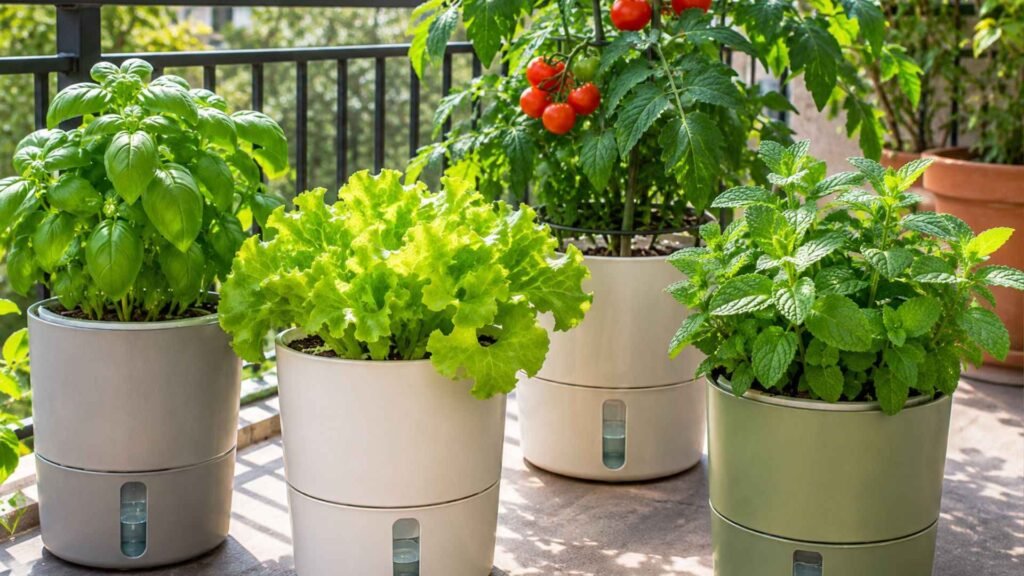
| Basil | Good | Provide adequate light and avoid waterlogging |
| Lettuce | Good | Consistent moisture supports leafy growth |
| Mint | Good | Monitor growth and prevent overcrowding |
| Tomatoes | Often suitable | Use a sufficiently large container and monitor water needs |
| Snake plants | Generally unsuitable | Prefer a drying period between waterings |
| Cacti | Unsuitable | Need a much drier growing environment |
| Many succulents | Generally unsuitable | Excessive moisture can cause root rot |
Plant requirements can vary by species, growing conditions, and container design. Always consider the specific plant rather than relying on the pot type alone.
How to Use a Self-Watering Pot Correctly
Using a self-watering pot properly helps maintain healthy root conditions and prevents common watering problems.
Step 1: Choose the Right Pot
Select a container that suits the plant’s mature size and root system. Make sure the reservoir is large enough for the expected water demand.
A water-level indicator and overflow opening can make reservoir management easier.
Step 2: Choose a Suitable Potting Mix
Use a growing medium that can wick moisture while retaining enough air for healthy roots.
Avoid extremely dense mixes that remain saturated or overly chunky mixes that may not distribute moisture effectively.
Step 3: Plant and Water from the Top Initially
After planting, water the growing medium from above to moisten it thoroughly.
Do not immediately assume the plant can receive all its moisture from the reservoir. Newly planted seedlings and transplants may not have roots reaching the wicking zone yet.
Step 4: Fill the Reservoir
Once the growing medium is properly moistened, add water through the designated fill opening.
If your pot has an overflow outlet, stop filling according to the manufacturer’s instructions.
Step 5: Monitor Moisture and Reservoir Levels
Check the reservoir regularly and observe the plant and growing medium.
A full reservoir does not automatically mean the roots are receiving enough moisture. If the soil remains dry, check the wick connection, potting mix, and root development.
Step 6: Clean and Maintain the Pot
Clean the reservoir periodically to remove algae, debris, and other buildup.
Occasionally flush the growing medium from above with clean water to help remove accumulated fertilizer salts.
How Often Should You Refill a Self Watering Pot?
There is no universal refill schedule for self-watering pots.
A small pot containing a fast-growing herb in a warm, bright location may use water much faster than a large pot containing a slow-growing houseplant in a cooler room.
Check the reservoir level regularly, especially during the first few weeks. Once you understand how quickly your plant uses water, you can develop a more reliable refill routine.
Avoid keeping a reservoir permanently full if the design and plant require periods of reduced moisture. Follow the manufacturer’s instructions and pay attention to the condition of the growing medium and roots.
Self Watering Pots vs. Traditional Pots: Which Is Better?
Neither type is automatically better. The right choice depends on your plant’s watering requirements and your growing conditions.
Choose self-watering pots if:
- You grow plants that prefer consistently moist soil.
- You want to reduce how frequently you refill or water containers.
- You sometimes forget regular watering.
- You grow herbs or leafy vegetables in containers.
- You want a convenient indoor watering arrangement.
Choose traditional pots if:
- You grow cacti or many succulents.
- Your plants need a distinct drying period.
- You prefer greater control over individual watering sessions.
- You regularly grow plants with different moisture requirements.
- You want a simple, inexpensive container.
Common Mistakes to Avoid
Even a good self-watering pot can cause problems when used incorrectly.
- Choosing the wrong plants: Avoid using constantly moist systems for plants that prefer dry conditions.
- Using unsuitable soil: A poor potting mix can prevent effective wicking or reduce root aeration.
- Ignoring the reservoir: Check the water level instead of assuming the pot takes care of everything.
- Skipping initial top watering: Newly planted roots may not reach the reservoir’s moisture supply.
- Overlooking salt buildup: Flush the growing medium periodically with clean water.
- Ignoring drainage and overflow: Make sure the pot’s water-management components work as intended.
Frequently Asked Questions
Do self watering pots really work?
Yes. They use a reservoir and capillary action to supply moisture from below. Their effectiveness depends on the pot design, growing medium, plant type, and proper maintenance.
Do self watering pots cause root rot?
They can contribute to root problems if the growing medium remains excessively wet or lacks sufficient air. Choosing suitable plants, using an appropriate potting mix, and monitoring moisture help reduce this risk.
Can you put any plant in a self watering pot?
No. Plants that prefer consistently moist conditions are generally better candidates than plants that need their growing medium to dry thoroughly between watering sessions.
Are self watering pots good for indoor plants?
They can be very useful for indoor plants that prefer steady moisture. They also reduce the need for frequent manual watering, although the reservoir still needs regular attention.
Do self watering pots need drainage holes?
Many designs have an overflow opening that controls the maximum reservoir level. Some also have additional drainage features. Check the pot’s design and manufacturer instructions rather than assuming all self-watering containers work identically.
Can you use regular potting soil in self-watering pots?
Some regular potting mixes can work, but the mix must wick moisture effectively and maintain adequate air space. A suitable, well-structured potting mix is generally preferable to heavy, compacted soil.
Are self watering pots good for vegetables?
Yes, many vegetables, including lettuce and tomatoes, can grow successfully in properly sized self-watering containers. They need suitable light, nutrients, growing space, and reservoir management.
Final Thoughts
Self watering pots offer a convenient way to maintain more consistent soil moisture without manually watering plants as frequently. Their built-in reservoirs and wicking systems are particularly useful for herbs, leafy vegetables, and houseplants that prefer steady moisture.
However, they are not a universal solution. Plants that require a drying period, unsuitable growing mediums, and poorly maintained reservoirs can all create problems.
Before choosing one, consider your plant’s water requirements, the pot’s design, and the growing conditions. When these factors match, a self-watering pot can make everyday plant care easier and more consistent.