
White LED vs Full Spectrum Grow Lights
Choosing the right grow light is one of the most important decisions for a successful indoor garden. Whether you’re growing herbs on a kitchen counter, starting vegetable seedlings, or maintaining tropical houseplants, the type of lighting you use directly affects plant health, growth rate, and overall productivity.
Among the many lighting options available today, white LED grow lights and full spectrum grow lights are two of the most popular choices. At first glance, they may seem similar because both use LED technology and are far more energy-efficient than older HID or fluorescent lights. However, they differ in light spectrum, plant performance, appearance, and ideal applications.
Many beginners assume that all LED grow lights are “full spectrum,” but that’s not always true. Some white LEDs are designed to mimic natural daylight for human comfort, while full spectrum grow lights are engineered specifically to deliver wavelengths that plants use most efficiently during photosynthesis. Understanding these differences can help you avoid buying the wrong light for your indoor garden.
In this guide, we’ll compare white LED and full spectrum grow lights side by side, explaining how they work, their advantages and disadvantages, and which option is best for different types of plants and growing environments. By the end, you’ll have a clear understanding of which lighting solution best fits your gardening goals and budget.
Quick Answer
White LED grow lights produce a broad white light that resembles natural daylight and work well for many houseplants and general indoor gardening. Full spectrum grow lights are specifically designed to provide the complete range of wavelengths plants need for every stage of growth, making them the better choice for seed starting, vegetables, flowering plants, and high-performance indoor gardens.
Quick Comparison
| Feature | White LED Grow Lights | Full Spectrum Grow Lights |
|---|---|---|
| Light Color | Natural white | Sunlight-like balanced spectrum |
| Plant Growth | Good | Excellent |
| Seed Starting | Good | Excellent |
| Flowering & Fruiting | Moderate | Excellent |
| Human Comfort | Excellent | Excellent |
| Energy Efficiency | High | High |
Comparison Table
| Feature | White LED | Full Spectrum |
|---|---|---|
| Photosynthesis Support | Good | Excellent |
| Vegetative Growth | Good | Excellent |
| Flower Production | Moderate | Excellent |
| Fruit Development | Moderate | Excellent |
| Indoor Display | Excellent | Excellent |
| Professional Growing | Limited | Highly Recommended |
| Cost | Usually Lower | Slightly Higher |
| Best For | Houseplants & Herbs | All Plant Types |
What Are White LED Grow Lights?
White LED grow lights are LED fixtures that emit light similar to natural daylight. Unlike older red-and-blue “blurple” grow lights, white LEDs produce a balanced white appearance that is pleasant to look at while still supplying plants with usable light for photosynthesis.
The white light is created by combining blue LED chips with a phosphor coating that converts part of the blue light into other visible wavelengths. The result is a broad spectrum of light that closely resembles daylight.
Because they provide comfortable illumination, white LED grow lights are commonly used in homes, offices, greenhouses, and indoor gardens where aesthetics are important.
Advantages of White LED Grow Lights
- Comfortable natural-looking light
- Energy-efficient operation
- Low heat output
- Suitable for everyday indoor use
- Easy to find in various sizes and price ranges
Limitations
Although white LED grow lights support healthy plant growth, some models are designed primarily for human lighting rather than maximizing plant performance. Lower-quality fixtures may not provide enough intensity for flowering vegetables or fruiting plants.
What Are Full Spectrum Grow Lights?
Full spectrum grow lights are specially engineered to imitate the spectral distribution of natural sunlight. Instead of focusing on just one or two colors, they provide a balanced combination of blue, green, red, and other wavelengths that plants use throughout their life cycle.
Modern full spectrum LEDs are designed to support every stage of plant development—from seed germination and vegetative growth to flowering and fruit production.
Because they closely replicate sunlight, they have become the preferred choice for indoor gardeners, commercial growers, and hydroponic systems.
Advantages of Full Spectrum Grow Lights
- Supports all growth stages
- Promotes stronger root development
- Encourages lush foliage
- Improves flowering and fruiting
- Suitable for almost every indoor plant
Limitations
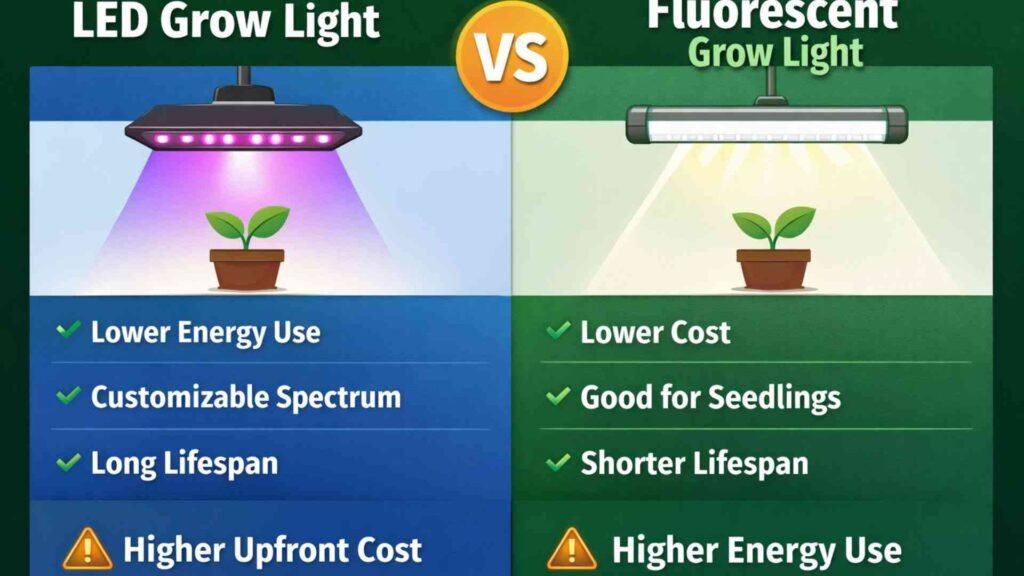
- Higher upfront cost than some standard white LEDs
- Premium models may include features unnecessary for casual growers
- Performance varies depending on build quality and light intensity
White LED vs Full Spectrum Grow Lights: Key Differences
Although both options use LED technology, there are several important differences that affect plant growth and overall performance.
1. Light Spectrum
The biggest difference is the spectrum of light each fixture provides.
White LED grow lights produce a broad white light that resembles daylight. They contain multiple wavelengths but may emphasize human visual comfort as much as plant growth.
Full spectrum grow lights are specifically engineered to provide wavelengths that plants absorb most effectively during photosynthesis. These fixtures deliver a more balanced spectrum that supports healthy growth from seedlings to mature flowering plants.
For gardeners growing vegetables, herbs, or flowering plants indoors year-round, the optimized spectrum of a full spectrum grow light generally offers better overall performance.
2. Plant Growth Performance
When comparing overall plant performance, full spectrum grow lights generally have the advantage because they are specifically designed for plant development.
Plants use different wavelengths of light during various growth stages. Blue wavelengths encourage compact vegetative growth and healthy leaves, while red wavelengths play a major role in flowering and fruit production. Full spectrum grow lights provide a balanced combination of these wavelengths, allowing plants to complete their entire life cycle under one light source.
White LED grow lights also support healthy growth, especially for foliage plants and herbs. However, some standard white LED fixtures may not deliver the same light intensity or optimized spectrum needed for demanding crops such as tomatoes, peppers, or flowering ornamentals.
Winner: Full Spectrum Grow Lights
3. Seed Starting
Young seedlings require consistent light to develop strong stems and healthy root systems. Insufficient or poor-quality lighting often causes seedlings to become tall, thin, and weak—a condition known as legginess.
Full spectrum grow lights provide the balanced light young plants need from germination through early growth. Because they closely mimic natural sunlight, seedlings typically grow more compact and vigorous.
White LED grow lights can also be effective for seed starting if they produce sufficient brightness and are positioned at the correct distance from the plants. However, not all white LEDs marketed as grow lights are designed specifically for this purpose.
Winner: Full Spectrum Grow Lights
4. Vegetative Growth
During the vegetative stage, plants focus on producing leaves, stems, and roots. This stage is critical because strong vegetative growth forms the foundation for future flowering and fruiting.
Both white LED and full spectrum grow lights perform well during this phase.
For leafy vegetables, herbs, pothos, philodendrons, monsteras, and many common houseplants, quality white LED grow lights often provide excellent results.
Full spectrum lights still maintain a slight advantage because they deliver a more complete range of wavelengths that supports vigorous overall development.
Winner: Full Spectrum Grow Lights (Slight Advantage)
5. Flowering and Fruiting
Flowering plants require different light conditions than foliage plants. Red wavelengths become increasingly important during bloom production and fruit development.
Full spectrum grow lights are specifically engineered to provide these wavelengths, making them the preferred option for crops such as:
- Tomatoes
- Peppers
- Strawberries
- Orchids
- African Violets
- Flowering annuals
White LED grow lights can encourage flowering if they are high-quality horticultural fixtures, but standard white LEDs may produce fewer flowers or smaller harvests.
If your goal is maximum blooms or fruit production, full spectrum lighting is generally the better investment.
Winner: Full Spectrum Grow Lights
6. Light Intensity
Light intensity determines how much usable energy reaches your plants.
Even the best spectrum cannot compensate for insufficient light output.
Many premium full spectrum grow lights are designed with higher PAR (Photosynthetically Active Radiation) values, delivering more usable light to plants across the growing area.
White LED fixtures vary significantly in brightness. Some decorative models produce attractive lighting but lack the intensity needed for demanding plants.
When comparing fixtures, look beyond wattage and pay attention to the manufacturer’s PPFD or PAR ratings whenever possible.
Winner: Depends on the Fixture (Full Spectrum Often Leads)
7. Energy Efficiency
One reason LEDs have become so popular is their excellent energy efficiency.
Both white LED and full spectrum grow lights consume far less electricity than traditional fluorescent, metal halide, or high-pressure sodium lights while producing significantly less heat.
Modern full spectrum LEDs are nearly as efficient as standard white LEDs, meaning energy consumption is rarely the deciding factor between the two.
Choosing a high-quality fixture is generally more important than focusing solely on the type of LED.
Winner: Tie
8. Heat Output
Excess heat can stress plants, dry out soil faster, and increase cooling requirements.
Fortunately, both white LED and full spectrum LED grow lights generate much less heat than older lighting technologies.
Most modern fixtures include aluminum heat sinks or built-in cooling systems that help maintain safe operating temperatures.
This allows lights to be positioned closer to plants without causing leaf burn, provided the manufacturer’s recommended hanging distance is followed.
Winner: Tie
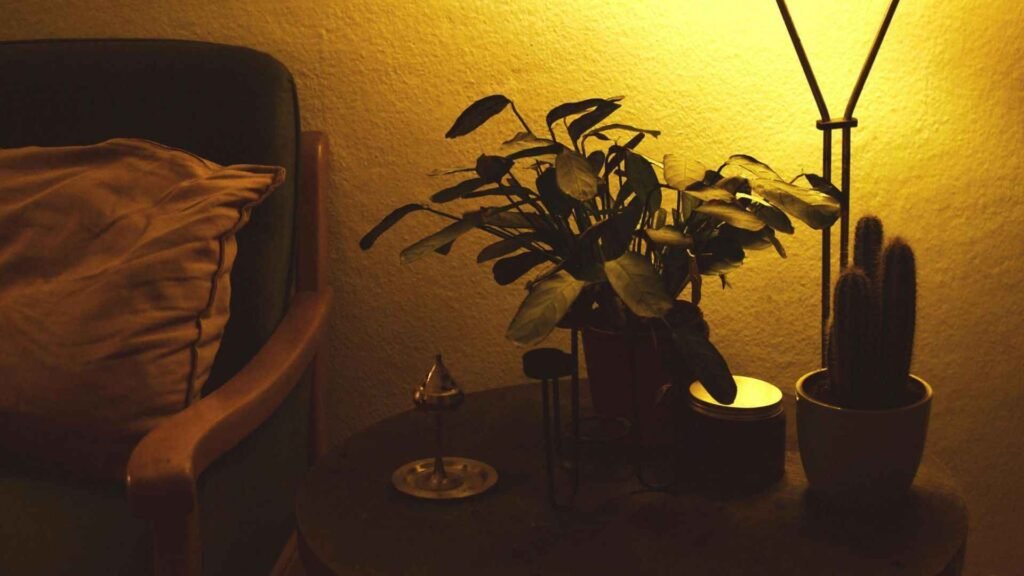
9. Appearance and Viewing Comfort
One of the biggest advantages of white LED lighting is its natural appearance.
Older grow lights often emitted an intense purple or pink glow that made it difficult to inspect plants and was unpleasant in living spaces.
White LED fixtures produce bright, clean light that makes it easy to identify pests, nutrient deficiencies, and leaf discoloration while also blending well with home décor.
Fortunately, many modern full spectrum LEDs also produce natural white light rather than the outdated “blurple” appearance.
As a result, both options are comfortable to use indoors, although standard white LEDs may appear slightly more natural to the human eye.
Winner: White LED Grow Lights (Slight Advantage)
10. Cost
Price is another important consideration when selecting a grow light.
White LED grow lights are often available at lower prices, making them attractive for beginners or hobby gardeners with a limited budget.
Full spectrum grow lights usually cost slightly more because they use specialized LED chips and are engineered specifically for horticultural performance.
Although the initial investment may be higher, the improved plant growth and versatility often make full spectrum lighting more cost-effective over time.
For gardeners planning to grow plants year-round, paying a little extra for a quality full spectrum fixture is usually worthwhile.
Winner: White LED Grow Lights (Lower Initial Cost)
Which Grow Light Is Best for Different Plants?
Choosing the right grow light depends on what you’re growing and your gardening goals.
| Plant Type | Recommended Light |
|---|---|
| Houseplants | White LED or Full Spectrum |
| Herbs | Full Spectrum |
| Leafy Greens | Full Spectrum |
| Seedlings | Full Spectrum |
| Succulents | White LED or Full Spectrum |
| Orchids | Full Spectrum |
| Flowering Plants | Full Spectrum |
| Tomatoes & Peppers | Full Spectrum |
For casual indoor gardening, either option can produce healthy plants. However, if you’re growing vegetables, fruits, or flowering plants indoors throughout the year, a quality full spectrum grow light will generally provide better overall results.
Pros and Cons
Every grow light has strengths and weaknesses. Understanding these can help you choose the best option for your indoor garden.
White LED Grow Lights
Pros
- Natural white light that’s comfortable for daily use
- Energy-efficient and cost-effective
- Low heat output
- Ideal for most houseplants and herbs
- Usually more affordable than premium full spectrum lights
- Blends well with home and office décor
Cons
- Some models are designed for general lighting rather than plant growth
- May not provide optimal light for flowering and fruiting plants
- Performance varies greatly between brands
Full Spectrum Grow Lights
Pros
- Supports every stage of plant growth
- Promotes stronger roots and healthier foliage
- Encourages better flowering and fruit production
- Suitable for vegetables, herbs, flowers, and houseplants
- Closely mimics natural sunlight
- Excellent choice for year-round indoor gardening
Cons
- Higher upfront cost
- Premium features may not be necessary for casual growers
- Quality varies depending on the manufacturer
Which Grow Light Should You Choose?
The best choice depends on your growing goals.
Choose White LED Grow Lights if you:
- Mainly grow decorative houseplants.
- Want attractive lighting for your home or office.
- Have a limited budget.
- Need supplemental lighting near windows.
- Grow low- to medium-light plants.
Choose Full Spectrum Grow Lights if you:
- Start seeds indoors.
- Grow vegetables year-round.
- Want better flowering and fruit production.
- Keep tropical plants that require strong light.
- Need one light for every stage of plant growth.
If you’re unsure which option to buy, a high-quality full spectrum LED grow light is usually the most versatile investment because it performs well with almost every type of indoor plant.
Frequently Asked Questions
Are white LED grow lights good for plants?
Yes. White LED grow lights can successfully grow many houseplants, herbs, and leafy greens. However, high-quality horticultural models generally perform better than standard household LED bulbs.
Are full spectrum grow lights better than white LED grow lights?
In most cases, yes. Full spectrum grow lights are specifically designed to support photosynthesis throughout every stage of plant growth, making them the better choice for seedlings, vegetables, flowering plants, and fruiting crops.
Can I use a regular white LED bulb instead of a grow light?
A standard household LED bulb can provide supplemental light for low-light houseplants, but it usually doesn’t produce the intensity or spectrum needed for plants that rely entirely on artificial lighting.
Which grow light is better for houseplants?
Both options work well for common houseplants. If your plants receive some natural sunlight, a white LED grow light is often sufficient. For rooms without windows or for demanding tropical plants, a full spectrum grow light is usually the better option.
Do full spectrum grow lights use more electricity?
No. Modern full spectrum LED grow lights are highly energy-efficient and generally consume electricity similar to white LED grow lights with comparable power ratings.
Are full spectrum grow lights worth the extra cost?
For gardeners growing vegetables, herbs, seedlings, orchids, or flowering plants, yes. The improved plant performance and versatility often justify the slightly higher purchase price.
Final Verdict
Both white LED and full spectrum grow lights are excellent choices for indoor gardening, but they serve slightly different purposes.
White LED grow lights are ideal for everyday use, decorative houseplants, and gardeners looking for an affordable, energy-efficient lighting solution. Their natural appearance makes them perfect for living rooms, offices, and other indoor spaces where aesthetics matter.
Full spectrum grow lights, however, are specifically engineered for plant growth. Their balanced spectrum supports seed germination, vegetative growth, flowering, and fruit production, making them the preferred choice for serious indoor gardeners and anyone growing plants without sufficient natural sunlight.
If your goal is simply to keep houseplants healthy, a quality white LED grow light may be all you need. But if you want maximum growth, healthier plants, and higher yields from vegetables or flowering species, investing in a quality full spectrum grow light is the smarter long-term decision.
Final Thoughts
Choosing between white LED and full spectrum grow lights doesn’t have to be complicated. Both technologies offer excellent energy efficiency, low heat output, and long operating life compared to older lighting systems.
The key difference lies in their purpose. White LED grow lights provide comfortable, natural-looking illumination that works well for many indoor plants, while full spectrum grow lights are optimized to deliver the wavelengths plants use most effectively throughout their entire life cycle.
Before purchasing a grow light, consider the types of plants you grow, the amount of natural sunlight available, your growing space, and your long-term gardening goals. Selecting the right light from the beginning will help your plants develop stronger roots, healthier foliage, and better overall growth.