
Introduction
The right gardening tools can make planting, pruning, weeding, watering, and soil preparation much easier. But if you’re new to gardening, the number of tools available can quickly become confusing. Do you really need a garden fork, hori hori knife, loppers, cultivator, pruning saw, and every other tool on the shelf?
Not necessarily.
For a small home garden, you can accomplish most everyday tasks with a relatively small collection of good-quality tools. The best choices depend on the size of your garden, the plants you grow, and the type of work you regularly do.
This guide explains the most useful gardening tools, what each one does, and which tools beginners should prioritize.
Quick Answer: What Gardening Tools Do You Need?
For most beginners, start with:
- Gardening gloves
- Hand trowel
- Bypass pruning shears
- Shovel
- Spade
- Garden rake
- Garden fork
- Watering can or hose
- Garden knife or hori hori
- Wheelbarrow or garden cart if you have a larger garden
You don’t need to buy everything at once. Start with the tools that match your most common gardening tasks, then add specialized tools when you actually need them.
Quality, comfort, and suitability for the job are generally more important than having the largest collection. UC Marin Master Gardeners recommends considering construction, comfort, and cost when choosing tools.
Gardening Tools and Their Uses
| Tool | Main Use | Beginner Priority |
|---|---|---|
| Gardening gloves | Protect hands | Essential |
| Hand trowel | Planting, transplanting, light digging | Essential |
| Pruning shears | Cutting small branches and stems | Essential |
| Shovel | Digging and moving soil | Essential |
| Spade | Digging, edging, cutting through soil | Essential |
| Garden rake | Leaves, debris, soil preparation | Essential for many gardens |
| Garden fork | Loosening and turning soil | Useful |
| Garden knife | Digging, weeding, planting | Useful |
| Watering can/hose | Watering plants | Essential |
| Loppers | Cutting thicker branches | Useful |
| Pruning saw | Cutting larger branches | Occasional |
| Wheelbarrow/cart | Moving soil, compost, debris | Useful for larger gardens |
| Hoe/cultivator | Weeding and soil cultivation | Useful |
| Dibble | Making planting holes | Optional |
Essential Gardening Tools for Beginners
1. Gardening Gloves
Gardening gloves are one of the simplest and most useful tools you can own.
They protect your hands from dirt, splinters, thorns, blisters, cuts, and some common garden irritants. The best glove depends on the work you’re doing, but a good pair should fit securely without restricting movement.
For general gardening, look for gloves that provide:
- A comfortable fit
- Good grip
- Breathable material
- Adequate protection
- Durable palms and fingers
If you regularly prune thorny plants, consider gloves with additional wrist or forearm protection.
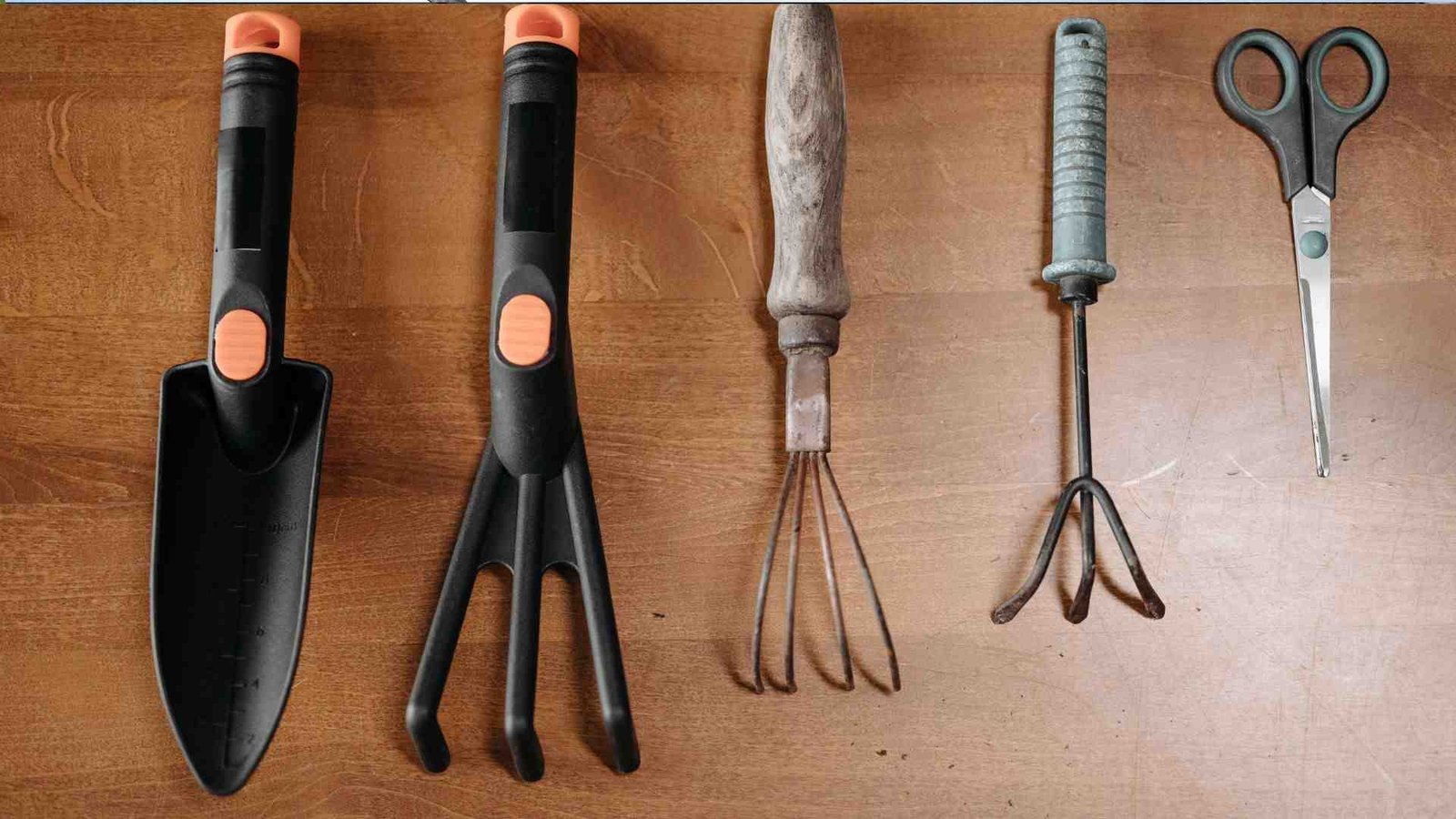
2. Hand Trowel
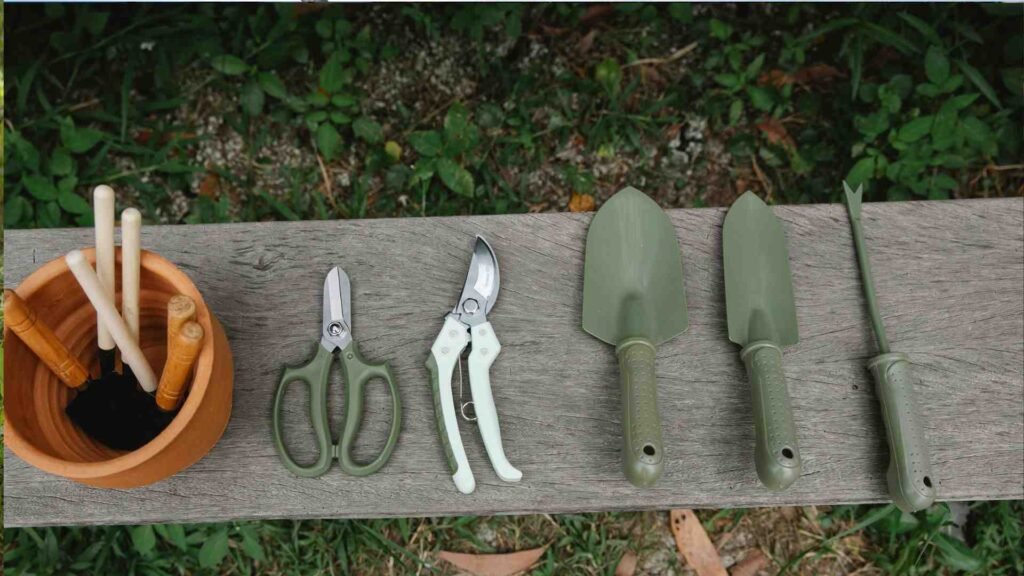
A hand trowel is one of the most useful tools for small gardening jobs.
Its small, scoop-shaped blade is useful for:
- Planting flowers
- Transplanting seedlings
- Planting herbs
- Digging small holes
- Working around existing plants
- Removing small weeds
A sturdy metal blade and comfortable handle make a trowel much easier to use repeatedly.
For container gardening and small beds, a trowel may be one of the first tools worth buying.
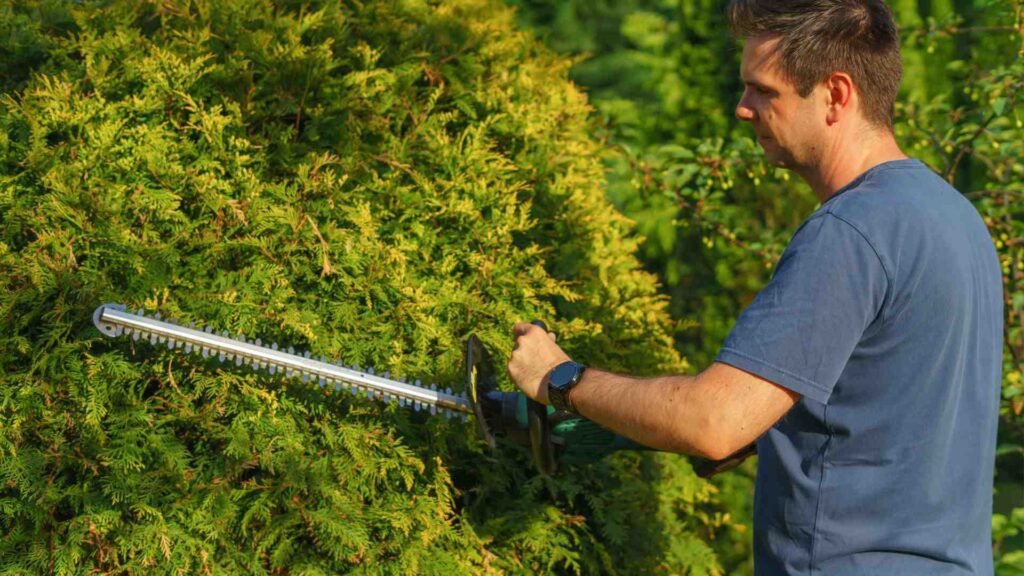
3. Pruning Shears
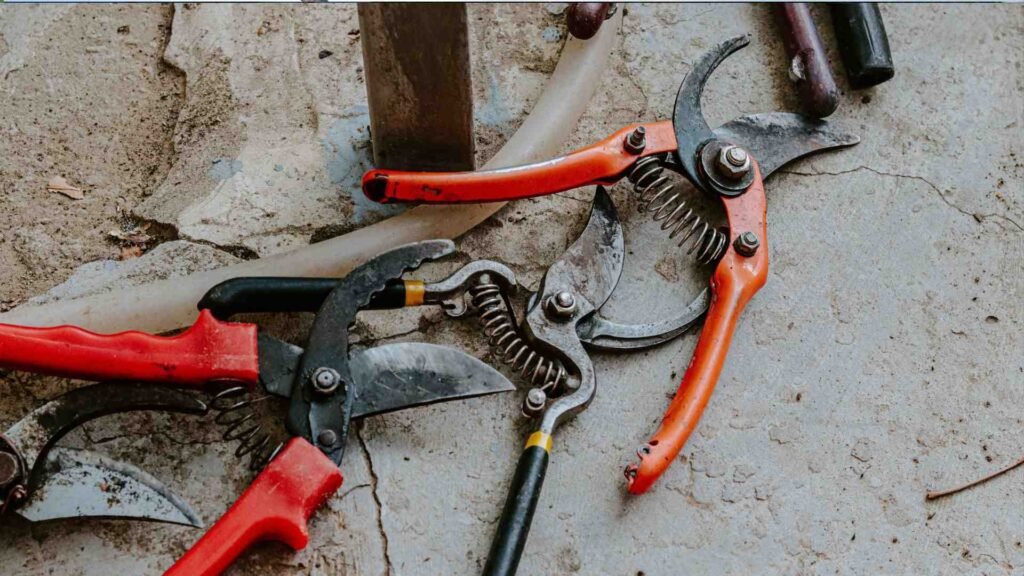
Pruning shears, also called hand pruners, are designed for cutting smaller stems and branches.
A bypass pruner works similarly to scissors, with one blade passing across another. This design is generally preferred for cutting live plant material because it makes a cleaner cut than anvil-style pruners. Anvil pruners are more suitable for dead wood because their cutting action can crush softer tissue.
When choosing pruning shears, pay attention to:
- Blade quality
- Handle comfort
- Your hand size
- Locking mechanism
- Ease of sharpening
- Replacement parts, if available
If you garden regularly, this is an area where spending a little more on a comfortable, durable tool can make sense.
4. Shovel
A shovel is primarily used for digging, lifting, and moving soil and other materials.
A round-point shovel is useful for general digging and moving loose material. Shovels can also help with larger jobs such as digging planting holes or moving compost.
Choose a handle length that allows you to work without excessive bending or awkward reaching.
5. Spade
A spade looks similar to a shovel but is generally designed around a flatter, straighter blade.
It can be useful for:
- Cutting through heavier soil
- Creating straight edges
- Digging trenches
- Incorporating organic matter
- Dividing or lifting plants
- Removing sections of sod
For gardeners who regularly work in established beds, a sturdy spade can be extremely useful.
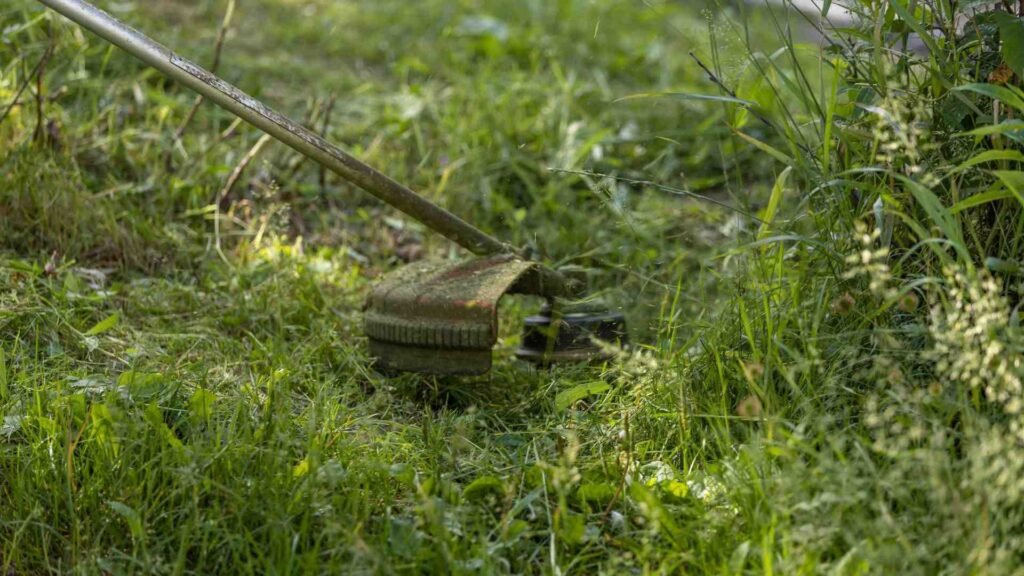
Digging and Soil Tools
6. Garden Fork
A garden fork has strong tines that can penetrate and loosen soil.
It can be useful for:
- Loosening compacted soil
- Turning soil
- Working compost into beds
- Lifting certain root crops
- Removing stones or debris
A garden fork is particularly useful when a shovel isn’t the best tool for breaking up or lifting the material.
7. Garden Knife or Hori Hori
A hori hori is a versatile garden knife with a pointed blade, often featuring a serrated edge.
It can be used for:
- Light digging
- Planting bulbs
- Removing weeds
- Cutting through roots
- Dividing small plants
- Working around plant crowns
UC Marin Master Gardeners lists the garden knife as a useful multipurpose tool for digging, weeding, planting, and dividing plants.
8. Hoe
A hoe is primarily a cultivation and weeding tool.
Different hoe designs are suited to different tasks. Some are useful for breaking up soil, while others are designed to remove weeds close to the soil surface or create planting furrows.
A hoe becomes particularly useful in larger vegetable gardens where hand-weeding individual plants would take too much time.
Raking and Cleanup Tools
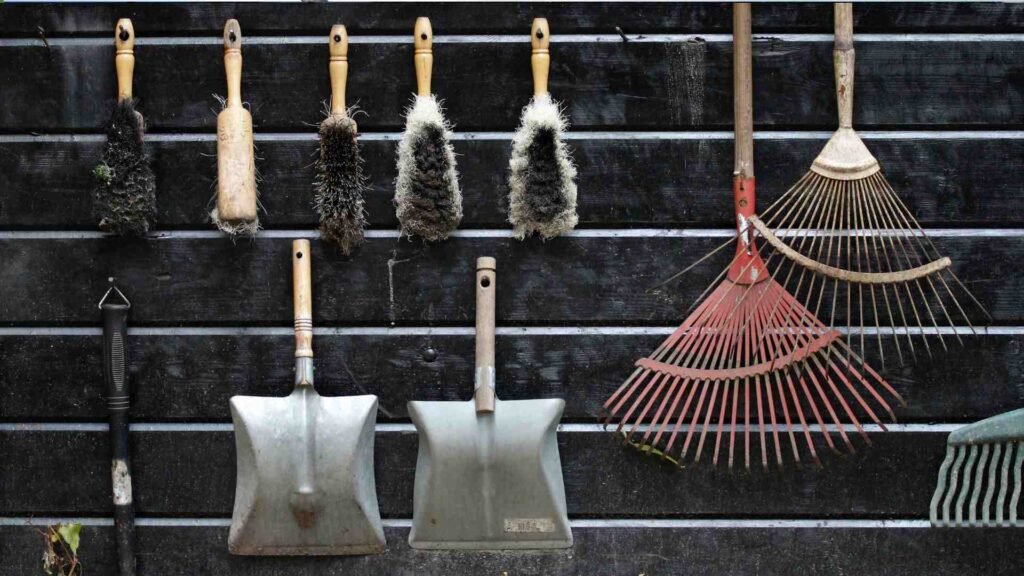
9. Garden Rake
A garden rake helps remove leaves, debris, and other unwanted material from garden areas.
Rakes can also be used for smoothing soil and spreading materials such as compost or mulch, depending on the rake design.
A leaf rake with flexible tines is better for lightweight debris, while a sturdier garden or bow rake is better suited to heavier soil and garden materials.
10. Hand Rake
A small hand rake is useful when a full-size rake cannot reach easily.
It’s particularly convenient around:
- Flower beds
- Dense shrubs
- Small garden rows
- Container plants
- Tight spaces
It’s an inexpensive tool, but it can save a lot of awkward bending and reaching.
Pruning Tools for Larger Plants
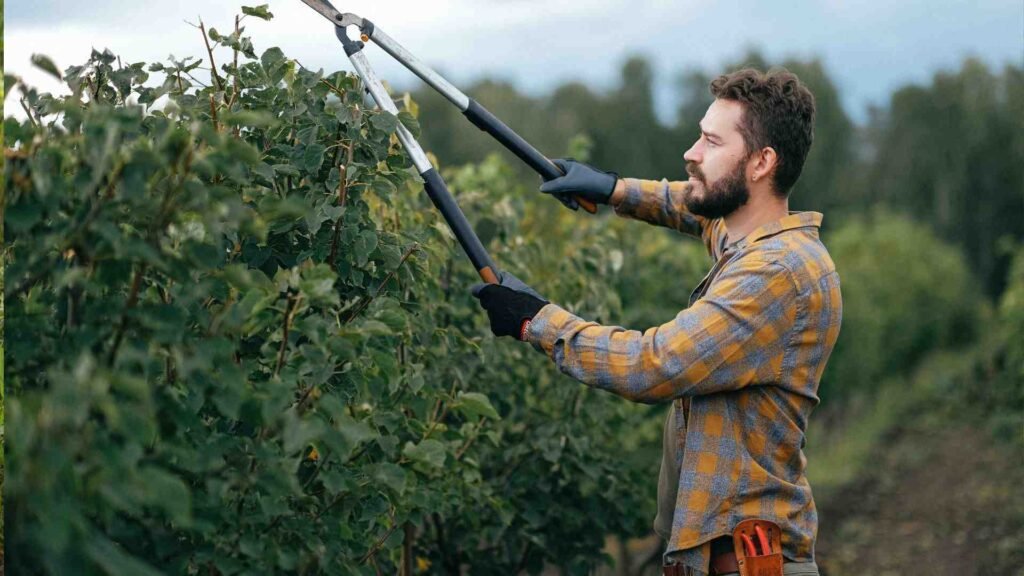
11. Loppers
Loppers are essentially long-handled pruning tools. Their longer handles provide more leverage than hand pruners, making them useful for thicker branches and harder-to-reach growth.
They’re useful when branches are too thick for ordinary hand pruners but don’t require a pruning saw.
Choose a bypass design when making cuts on appropriate live branches and select a tool sized for the work rather than simply buying the largest model.
12. Pruning Saw
A pruning saw is designed for branches that are too large for hand pruners.
Pruning saws are available with fixed or folding blades. UC Marin recommends them for larger branches beyond the practical capacity of hand pruners.
If you only grow small annual plants and herbs, you may rarely need one. For trees and mature shrubs, however, it can become an important tool.
Watering Tools
13. Watering Can
A watering can is useful for small gardens, containers, seedlings, and indoor plants.
A rose attachment can distribute water more gently, which is particularly useful around delicate seedlings.
14. Garden Hose
A hose is more practical for larger gardens where carrying a watering can would become inconvenient.
For regular watering, choose a hose and nozzle that allow you to control the flow rather than delivering a harsh stream directly onto soil.
Drip irrigation and soaker hoses can also be useful when you want water delivered more directly to planting areas.
Moving Soil, Compost, and Debris
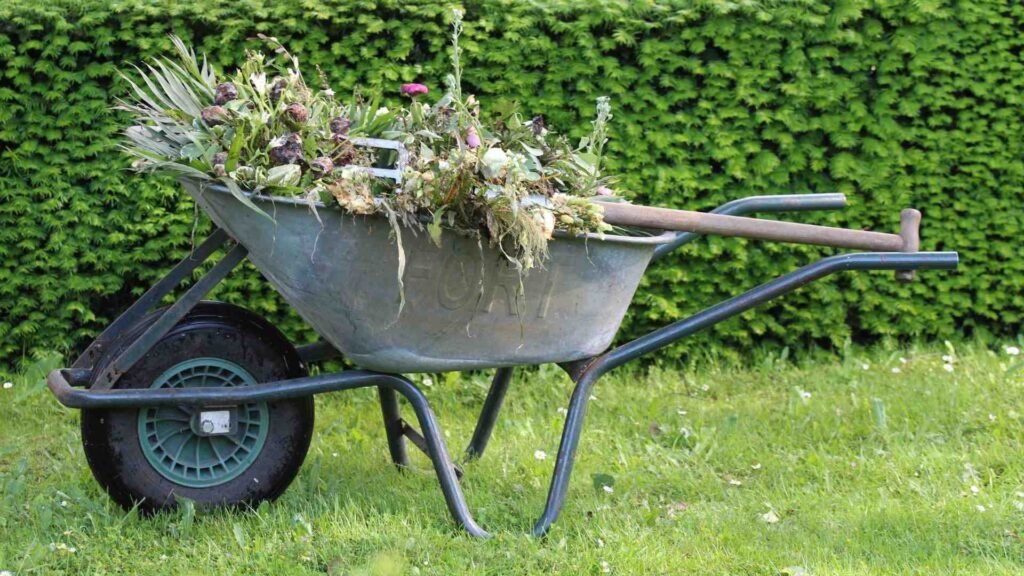
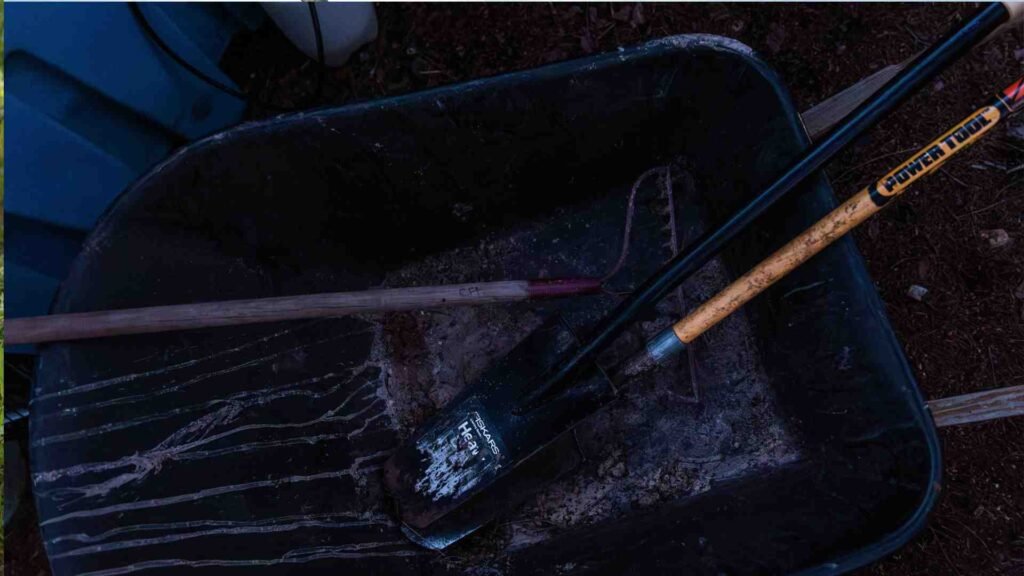
15. Wheelbarrow or Garden Cart
A wheelbarrow or garden cart becomes increasingly useful as the size of your garden increases.
It can transport:
- Soil
- Compost
- Mulch
- Stones
- Garden debris
- Tools
- Harvested vegetables
For a small balcony or container garden, you probably don’t need one. For a larger yard, it can save considerable effort.
Specialized Gardening Tools
Once you have the basics, you can add specialized tools according to your garden.
Examples include:
- Dibble: Makes planting holes for seeds and seedlings.
- Pole pruner: Reaches branches above normal arm height.
- Cultivator: Loosens surface soil and helps with small weeds.
- Rain gauge: Measures rainfall.
- Plant labels: Help identify varieties and planting dates.
- Kneeling pad: Makes low-to-ground work more comfortable.
- Ergonomic tools: Designed to reduce awkward wrist or hand positions.
Specialized tools can be useful, but they shouldn’t automatically be part of every beginner’s shopping list. Their value depends on the type of garden and tasks you perform.
How to Choose the Right Gardening Tools
Before buying a tool, ask three questions:
1. What job will it do?
Don’t buy a tool simply because it looks useful. Identify the task first.
2. How often will I use it?
It’s usually worth spending more on tools you use repeatedly, such as pruning shears or a trowel. A specialized tool used once or twice a year doesn’t necessarily need to be your most expensive purchase.
3. Is it comfortable?
A tool that is technically durable but uncomfortable to hold may end up unused.
Consider:
- Handle shape
- Weight
- Grip
- Length
- Your height
- Your hand size
- The amount of force required
UC Marin’s guidance emphasizes construction, comfort, and cost when evaluating garden tools.
How to Care for Gardening Tools
Good tools can last for years when maintained properly.
After gardening:
- Remove soil and plant debris.
- Clean cutting tools.
- Dry metal components.
- Keep blades sharp.
- Apply appropriate oil when needed to reduce rust.
- Store tools in a dry location.
- Inspect handles and moving parts regularly.
Pruning tools deserve particular attention. If you’ve used them on diseased plant material, proper cleaning and sanitation are important before using them on another plant.
Never leave quality tools lying outside exposed to rain and moisture when you can avoid it.
Which Gardening Tools Do Beginners Actually Need?
If you’re starting a small garden, don’t feel pressured to buy a giant tool collection.
A practical beginner kit can be:
- Gardening gloves
- Hand trowel
- Bypass pruning shears
- Shovel
- Spade or garden fork
- Garden rake
- Watering can or hose
From there, add a garden knife, loppers, pruning saw, hoe, wheelbarrow, or specialized tools according to the plants and garden tasks you actually have.
This approach saves money and prevents your shed from filling with tools that rarely get used.
Common Gardening Tool Buying Mistakes
Buying too many tools at once
A large collection isn’t necessarily a better collection.
Choosing price over quality
The cheapest tool may not provide the durability or comfort needed for repeated use.
Buying the wrong size
A tool that’s too heavy, too long, or poorly balanced can make routine work unnecessarily difficult.
Ignoring maintenance
Even excellent tools can deteriorate quickly when left dirty, wet, or dull.
Choosing a tool before identifying the task
Start with the gardening job, then choose the appropriate tool.
FAQs
What are the most essential gardening tools?
For most beginners, gloves, a trowel, pruning shears, shovel, spade or fork, rake, and watering equipment cover many common gardening tasks.
What is the most useful gardening tool?
There isn’t one universal answer. Pruning shears, trowels, and shovels are among the tools frequently used by home gardeners, but the most useful tool depends on the type of garden you maintain.
Do beginners need expensive gardening tools?
No. Beginners don’t need premium versions of every tool. It’s more useful to invest in good-quality tools for jobs you perform frequently and buy specialized tools only when necessary.
How often should gardening tools be cleaned?
Clean tools after use, particularly cutting tools. Removing soil, sap, and plant material helps keep tools in good condition and reduces the risk of transferring problems between plants.
Should gardening tools be stored outside?
It’s better to store them somewhere dry and protected. Moisture can contribute to rust and deterioration, particularly on metal tools.
Final Verdict
You don’t need dozens of gardening tools to maintain a healthy garden. You need the right tools for the work you actually do.
For most beginners, start with a good pair of gloves, trowel, pruning shears, shovel, spade or fork, rake, and watering tool. These cover a large portion of everyday gardening jobs.
Then build your collection gradually. Add loppers for thicker branches, a pruning saw for larger cuts, a hoe for regular weeding, and a wheelbarrow or cart if your garden becomes large enough to justify one.
The best gardening tools are not necessarily the most expensive or the most numerous. They’re the ones that are comfortable, durable, appropriate for the job, and regularly useful in your garden.