
Blue Light vs Red Light for Plants: What Each One Does and Which You Need
If you’re comparing grow lights, you’ve probably come across two important colors: blue light and red light. But which one is better for plants?
The short answer is: neither is universally better. Blue and red light affect plants in different ways, and plants can benefit from both. For most indoor gardeners, a quality full-spectrum grow light is usually more practical than relying on only one color.
Here’s what you need to know about blue vs. red light and how to choose the right option for your plants.
Blue Light vs Red Light for Plants at a Glance
| Feature | Blue Light | Red Light |
|---|---|---|
| Approximate range | 400–500 nm | 600–700 nm |
| Main role | Supports vegetative development and plant structure | Supports photosynthesis and reproductive development |
| Particularly useful for | Seedlings and leafy growth | Flowering and fruiting plants |
| Plant response | Can promote more compact growth | Can influence flowering and plant architecture |
| Best general use | As part of a balanced spectrum | As part of a balanced spectrum |
These descriptions are useful guidelines, but plant responses aren’t determined by color alone. Light intensity, plant species, growth stage, and the combination of wavelengths all matter.
What Does Blue Light Do for Plants?
Blue light occupies a relatively short wavelength range within the visible spectrum. Plants use blue wavelengths for both photosynthesis and light-signaling processes that influence how they grow.
One of the most noticeable effects of blue light is its influence on vegetative growth and plant structure.
Adequate blue light can help plants develop leaves and maintain a more compact growth pattern. This is particularly useful during the early stages of growth when you’re trying to encourage healthy foliage rather than excessive stretching.
Blue light is especially relevant for:
- Seedlings
- Young plants
- Leafy houseplants
- Vegetative growth
- Maintaining compact plant structure
However, it would be misleading to say that blue light is simply the “leaf-growing color.” Plants don’t divide their needs into completely separate color categories. Blue wavelengths contribute to several biological processes, and their effects depend on the overall lighting environment.
What Does Red Light Do for Plants?
Red light has longer wavelengths than blue light and is another important part of the spectrum used by plants.
Red wavelengths are highly effective for photosynthesis and are also involved in plant developmental responses, including processes associated with flowering and reproduction.
This makes red light particularly important when growing plants that produce flowers or fruit indoors.
Red light can be useful for:
- Flowering plants
- Fruiting plants
- Later growth stages
- Photosynthesis
- Influencing plant development
But there’s another important misconception to avoid: red light isn’t only for flowering.
A plant can use red light during vegetative growth as well. In practice, the goal isn’t usually to completely switch from blue to red as a plant matures. A balanced spectrum is generally a more useful approach for general indoor growing.
Blue vs Red Light: Which Is Better?
Neither one is simply “better.”
The better question is:
What is your plant trying to do, and what does the overall grow-light spectrum provide?
Blue light is particularly valuable for vegetative development and plant structure, while red light plays an important role in photosynthesis and developmental processes such as flowering.
For example, a seedling can benefit from adequate blue light, while a flowering plant may have greater interest in a spectrum that provides substantial red wavelengths.
But plants don’t stop needing other wavelengths when they enter a different growth stage.
That’s why choosing a grow light based solely on one color can be unnecessarily restrictive.
Which Is Better for Seedlings: Blue or Red?
Blue light is particularly useful for seedlings, especially because of its influence on plant structure and vegetative development.
When seedlings receive an appropriate amount of light, blue wavelengths can help support compact growth rather than the weak, stretched appearance associated with inadequate lighting.
That doesn’t mean seedlings should receive blue light exclusively.
A grow light providing a broader spectrum can supply blue along with other useful wavelengths, making it a more practical choice for most home growers.
Which Is Better for Flowering Plants: Blue or Red?
For flowering plants, red light is particularly important, but that doesn’t mean you should eliminate blue light.
Red wavelengths are strongly involved in photosynthesis and plant developmental responses related to flowering. A suitable grow light can therefore provide substantial red light while still maintaining a broader spectrum.
If you’re growing flowering or fruiting plants indoors, look for a grow light designed to provide a useful overall spectrum rather than simply purchasing a red bulb.
Are Red and Blue Grow Lights Better Than Full-Spectrum Lights?
This is where grow-light shopping can become confusing.
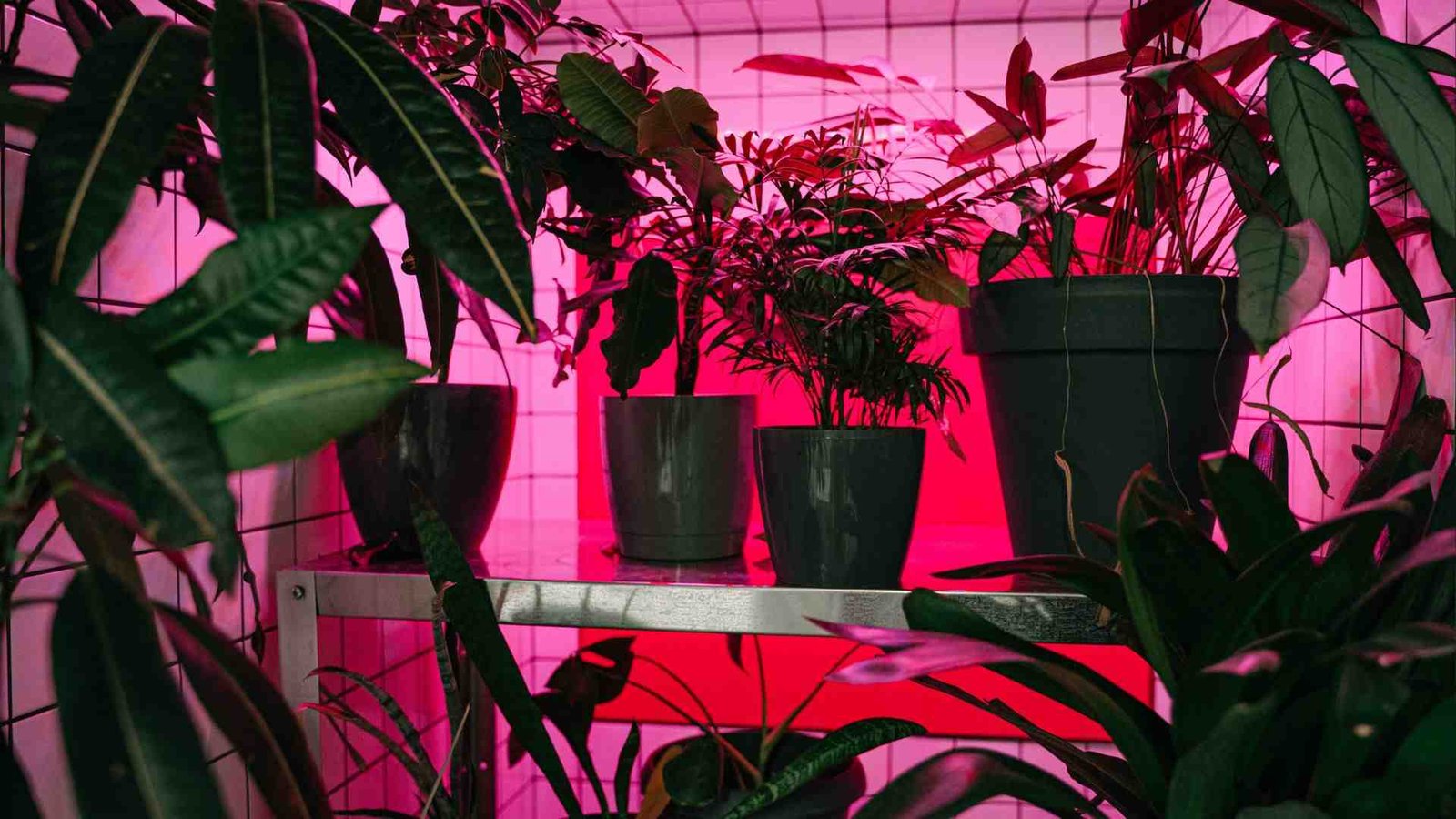
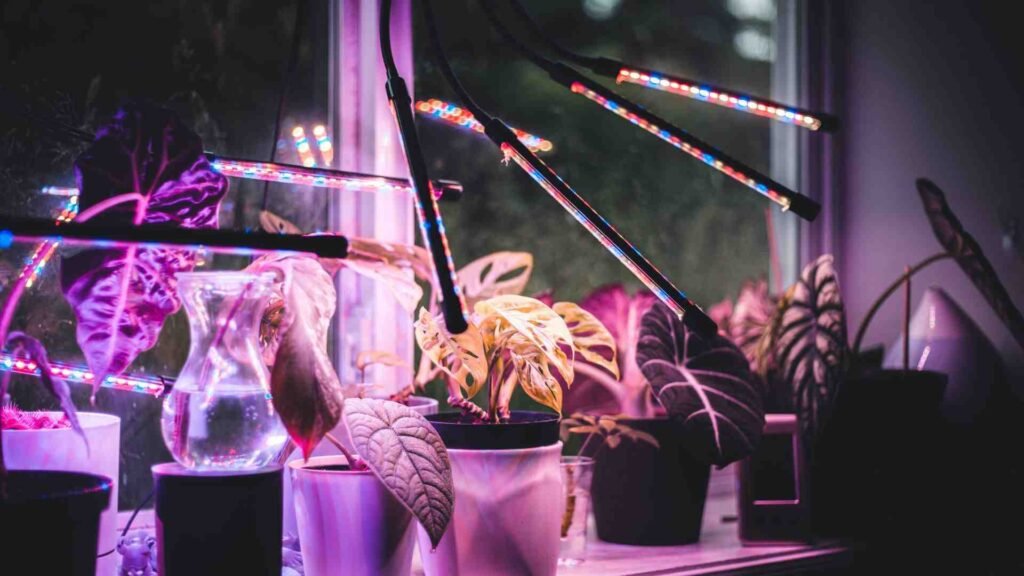
Some LED grow lights are designed around a combination of red and blue LEDs, which can produce the familiar purple or pink appearance. These lights can provide wavelengths that plants use, but a purple-looking grow light isn’t automatically better than a white or full-spectrum light.
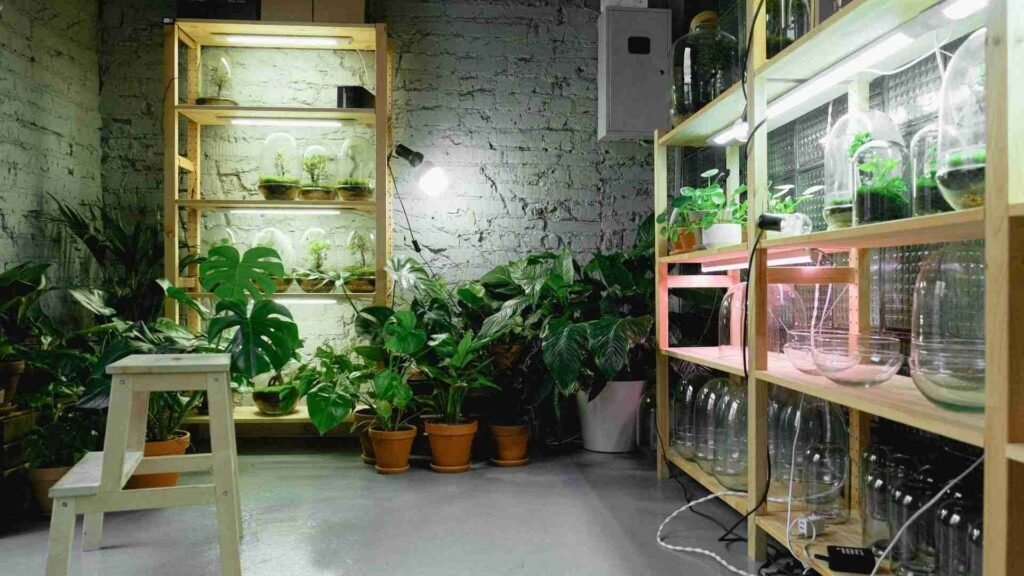
Modern full-spectrum grow lights are designed to provide a broader range of wavelengths while still delivering important blue and red light.
For most indoor gardeners, full-spectrum lighting has several practical advantages:
- Suitable for a wider range of plants
- Useful across multiple growth stages
- Easier to use as an all-purpose light
- More natural-looking light for observing plant health
- Doesn’t require switching between different colored lights
If you’re growing ordinary houseplants, herbs, seedlings, or a mixture of indoor plants, a good full-spectrum LED is usually the simpler choice.
Does Light Color Matter More Than Light Intensity?
Not necessarily.
This is one of the most important points to understand when choosing a grow light.
You can have a carefully designed spectrum, but if the plant isn’t receiving enough usable light, the spectrum alone won’t solve the problem.
That’s why growers also consider measurements such as PPFD and DLI when evaluating grow-light performance.
PPFD describes how much photosynthetically active light reaches a specific area of the plant, while DLI considers the total amount of that light received over a day.
In other words:
Spectrum matters, but the amount of light reaching the plant matters too.
This is why two grow lights with similar-looking colors can produce very different results.
Can Plants Grow Under Only Blue Light?
Plants can respond to blue light and use it for photosynthesis, but using only blue light isn’t usually the best general-purpose strategy.
A single-color light provides a much narrower spectrum than a quality broad-spectrum grow light.
If your goal is to grow healthy indoor plants rather than conduct a specific growing experiment, a broader spectrum is generally more practical.
Can Plants Grow Under Only Red Light?
Red light is also highly useful to plants, but red-only lighting isn’t generally the ideal solution for everyday indoor growing.
Red light can support photosynthesis and influence plant development, but plants respond to multiple wavelengths and environmental factors.
For general-purpose growing, it’s usually better to think of red light as one important part of the spectrum rather than the entire spectrum.
What Color Grow Light Is Best for Houseplants?
For most houseplants, don’t make the decision based solely on whether a grow light is blue or red.
Instead, look for a quality full-spectrum LED grow light with appropriate intensity and coverage.
When comparing lights, consider:
- Spectrum: Look for broad-spectrum or full-spectrum lighting.
- PPFD: Check how much usable light reaches the plant.
- Coverage: Make sure the fixture can illuminate the area where your plants are growing.
- Brightness control: Adjustable output can be useful for different plants and growth stages.
- Timer: Automatic scheduling makes consistent lighting easier.
- Heat: Consider how much heat the fixture produces, particularly in small spaces.
For a single houseplant, you may not need a powerful grow fixture designed for a large growing area. Matching the light to the plant and growing space is more important than simply buying the strongest light available.
Common Blue and Red Grow-Light Mistakes
Assuming red light is only for flowers
Red wavelengths are important for flowering, but plants also use red light for photosynthesis and other developmental processes.
Assuming blue light is only for seedlings
Blue light is especially relevant to vegetative development, but its usefulness isn’t limited to the seedling stage.
Choosing a light based only on its color
The color you see isn’t enough to judge a grow light. Intensity, coverage, spectrum and the distance between the fixture and plant all matter.
Thinking purple light automatically means better growth
The appearance of a grow light doesn’t tell you how effective it is. A purple red-and-blue fixture isn’t automatically superior to a quality white full-spectrum LED.
Ignoring light intensity
Even a well-designed spectrum won’t make up for insufficient light reaching the plant.
Blue vs Red Light for Plants: The Bottom Line
Blue and red light both have important roles in plant growth.
Blue light is particularly associated with vegetative development, leaf growth and plant structure, while red light is highly useful for photosynthesis and is especially important for developmental processes such as flowering.
But you usually don’t need to choose one and completely eliminate the other.
For most indoor gardeners, the practical choice is a quality full-spectrum grow light that provides an appropriate combination of wavelengths along with enough light for the plant.
So instead of asking, “Should I buy blue or red light?” ask:
“Does this grow light provide the right spectrum, enough usable light, and adequate coverage for my plants?”
That’s a much better way to choose an indoor grow light.
FAQs
Is blue or red light better for plants?
Neither is universally better. Blue and red wavelengths have different effects on plant growth, and plants generally benefit from a combination of wavelengths.
Is blue light good for seedlings?
Yes. Blue light is particularly useful for supporting vegetative development and plant structure during early growth.
Is red light good for flowering plants?
Yes. Red light plays an important role in photosynthesis and plant developmental responses associated with flowering.
Are red and blue grow lights better than full-spectrum lights?
Not necessarily. For most indoor gardeners, a quality full-spectrum grow light is a more versatile choice because it provides a broader range of wavelengths for different plants and growth stages.
Do plants need both blue and red light?
Plants can use both blue and red wavelengths, but their ideal lighting environment depends on the species, growth stage, intensity and overall spectrum.
What is the best grow-light color for houseplants?
For most houseplants, a good full-spectrum LED grow light is a practical choice rather than a single-color blue or red light.