
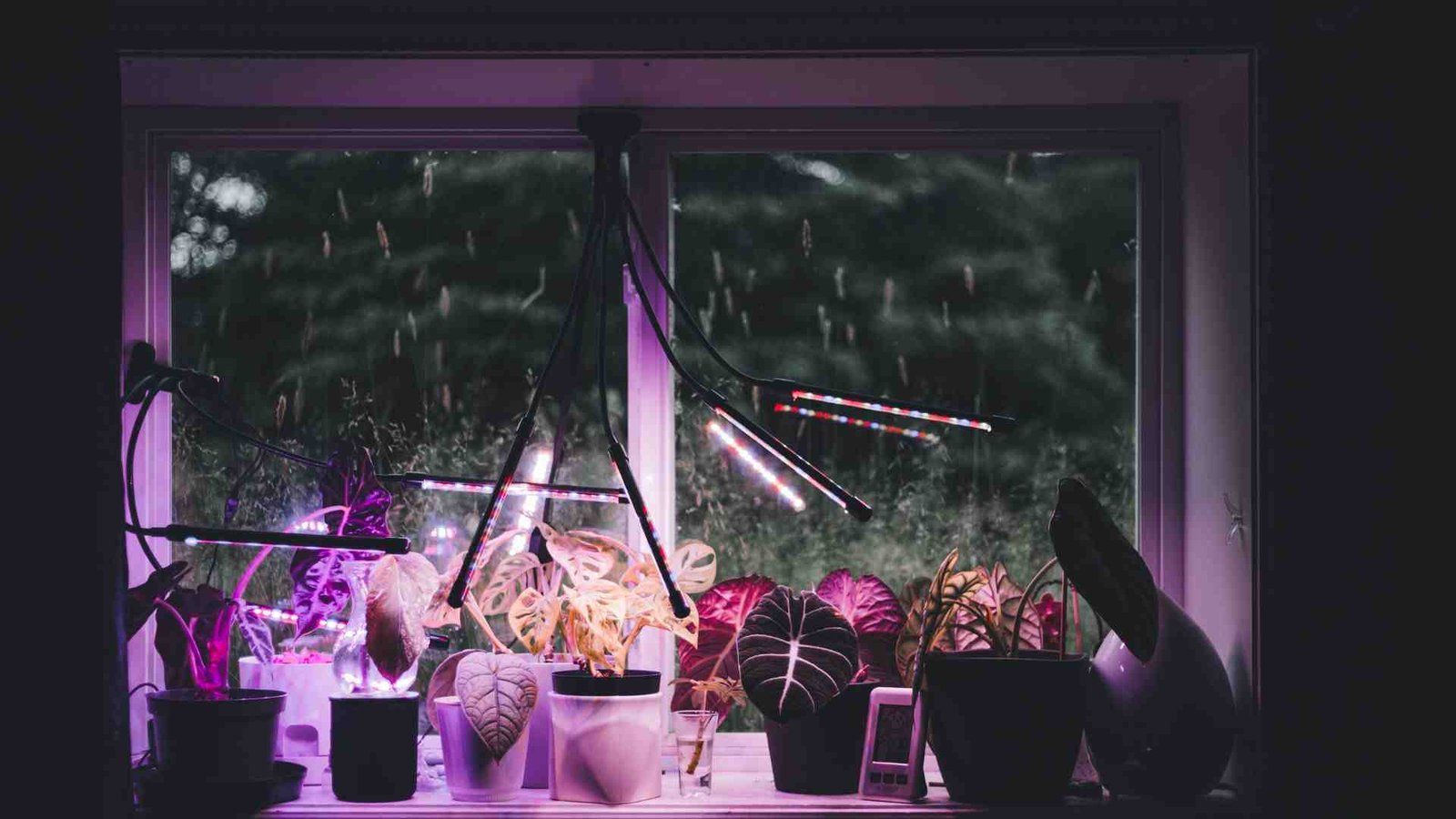
PPFD in Grow Lights
If you’re shopping for grow lights, you’ve probably seen specifications such as PPFD, PAR, PPF, lumens, and watts. Among these terms, PPFD is one of the most useful measurements for understanding whether a grow light is actually delivering enough usable light to your plants.
PPFD stands for Photosynthetic Photon Flux Density. In simple terms, it tells you how many photosynthetically active light particles are reaching a specific area of your plant canopy every second.
This is important because a grow light can produce plenty of light without delivering enough of it to the leaves. The distance between the fixture and the plant, the design of the light, its power, reflectors, lenses, and growing area can all affect the amount of light that eventually reaches your plants.
Unlike lumens, which measure brightness based on human vision, PPFD is specifically related to the light plants can use for photosynthesis. This makes it a much more useful measurement when comparing horticultural lighting.
Whether you’re growing houseplants, herbs, seedlings, leafy greens, flowering plants, or vegetables indoors, understanding PPFD can help you choose a grow light that matches your plants’ actual lighting requirements.
In this guide, we’ll explain what PPFD means, how it’s measured, why it matters, how it differs from PAR and PPF, and how to determine whether a grow light provides enough light for your plants.
Quick Answer
PPFD is the amount of photosynthetically active light reaching a specific area of a plant every second. It is measured in micromoles per square meter per second (µmol/m²/s). A higher PPFD means more usable light is reaching the plant canopy. The ideal PPFD depends on the plant species and its stage of growth.
Quick Comparison
| Measurement | What It Measures | Main Use |
|---|---|---|
| PPFD | Light reaching plants | Determine light intensity |
| PAR | Usable light wavelength range | Understand plant-usable spectrum |
| PPF | Total photosynthetic light produced | Compare fixture output |
| Lumens | Visible brightness | Human lighting |
| Watts | Electricity consumed | Energy usage |
Comparison Table
| Specification | PPFD | PPF | PAR | Lumens |
|---|---|---|---|---|
| Measures Light at Plant | Yes | No | No | No |
| Measures Total Fixture Output | No | Yes | No | No |
| Related to Photosynthesis | Yes | Yes | Yes | No |
| Unit | µmol/m²/s | µmol/s | 400–700 nm | lm |
| Useful for Grow Lights | Excellent | Excellent | Excellent | Limited |
What Does PPFD Stand For?
PPFD stands for Photosynthetic Photon Flux Density.
The name sounds complicated, but each part describes what the measurement represents.
Photosynthetic refers to the process plants use to convert light energy into chemical energy.
Photon refers to an individual particle of light.
Flux describes the flow or movement of those photons.
Density means the measurement is calculated over a specific area.
Put together, PPFD tells you how many photosynthetically active photons are hitting a square meter of plant surface every second.
PPFD is normally expressed as:
µmol/m²/s
This means micromoles of photons per square meter per second.
For example, a grow light might produce a PPFD of 500 µmol/m²/s at a particular distance. This tells you the amount of photosynthetically active light reaching that location, not simply how much light the fixture produces overall.
Why Is PPFD Important?
PPFD is important because plants need a sufficient amount of usable light to perform photosynthesis efficiently.
If PPFD is too low, plants may struggle to produce enough energy for healthy development. They may become stretched, produce smaller leaves, grow slowly, or fail to flower properly.
If PPFD is appropriate for the plant, it can support:
- Healthy leaf development
- Stronger stems
- Efficient photosynthesis
- Vigorous vegetative growth
- Flower production
- Fruit development
- Better overall plant performance
However, more PPFD isn’t always better. Plants have different light requirements, and excessively high PPFD can cause stress if other environmental factors such as carbon dioxide, temperature, water, and nutrients aren’t suitable.
The goal is to provide the appropriate PPFD, rather than simply choosing the highest number available.
How Is PPFD Measured?
PPFD is measured using a specialized quantum sensor or PAR meter.
These instruments detect photosynthetically active photons reaching a particular location and calculate their density over an area.
Grow light manufacturers often provide PPFD maps for their fixtures. A PPFD map shows how much light reaches different points underneath the grow light at a specific hanging height.
For example, a fixture might have:
| Position | PPFD |
|---|---|
| Center | 800 µmol/m²/s |
| Near Center | 700 µmol/m²/s |
| Edge | 450 µmol/m²/s |
| Corner | 300 µmol/m²/s |
This information is useful because light intensity is rarely identical across the entire growing area.
The center directly beneath a grow light usually receives more light than the edges. A good grow light should provide reasonably even coverage rather than producing an extremely bright center with very weak edges.
PPFD vs PAR
PPFD and PAR are related but they are not the same thing.
PAR describes the range of light wavelengths that plants can use for photosynthesis, generally covering approximately 400–700 nanometers.
PPFD measures how many photons within that photosynthetically active range are reaching a specific area each second.
A simple way to remember the difference is:
- PAR = the usable light range
- PPFD = the amount of usable light reaching the plant
This distinction is important when shopping for grow lights. A manufacturer may advertise a fixture as “full spectrum” or “high PAR,” but the PPFD tells you much more about the actual light intensity reaching your plants.
PPFD vs PPF
PPFD is also different from PPF, or Photosynthetic Photon Flux.
PPF measures the total number of photosynthetically active photons produced by a grow light each second. It is measured in µmol/s.
PPFD takes this a step further by considering where those photons land.
For example, a grow light may have a high PPF because it produces a large amount of usable light. However, if that light is spread over a very large area, the PPFD at the plants may be relatively low.
Think of it this way:
PPF = How much usable light the fixture produces.
PPFD = How much usable light reaches the plants.
For most indoor gardeners, PPFD is more useful when determining whether plants are receiving enough light.
Ideal PPFD Levels for Different Plants
There is no single PPFD level that works for every plant. Different species have evolved to grow under different amounts of natural light, so their artificial lighting requirements can vary significantly.
As a general guideline, indoor gardeners can use the following ranges:
| Plant Type | Approximate PPFD |
|---|---|
| Low-Light Houseplants | 50–150 µmol/m²/s |
| Common Houseplants | 100–300 µmol/m²/s |
| Seedlings | 100–300 µmol/m²/s |
| Herbs | 200–400 µmol/m²/s |
| Leafy Greens | 200–500 µmol/m²/s |
| Flowering Plants | 400–800 µmol/m²/s |
| Fruiting Vegetables | 500–1,000+ µmol/m²/s |
These numbers are general guidelines rather than strict requirements. The ideal PPFD also depends on photoperiod, temperature, plant variety, nutrition, and other growing conditions.
PPFD for Low-Light Houseplants
Plants such as snake plants, ZZ plants, pothos, and many peace lilies can tolerate relatively low light levels.
A PPFD range of approximately 50–150 µmol/m²/s can be suitable for maintaining many low-light houseplants.
At these levels, plants may grow slowly, but they can remain healthy when their other requirements are met.
Increasing PPFD can encourage faster growth, but these plants don’t necessarily require intense grow lighting.
PPFD for Seedlings
Young seedlings need sufficient light to develop strong stems and healthy leaves.
A general range of 100–300 µmol/m²/s works well for many seedlings.
If the PPFD is too low, seedlings may become tall and thin as they stretch toward the light. This condition is commonly called legginess.
However, extremely intense light can also stress young plants, particularly when they have just germinated. Increasing light gradually as seedlings develop is often a better approach than immediately exposing them to very high PPFD.
PPFD for Herbs and Leafy Greens
Herbs and leafy vegetables generally require more light than low-light ornamental plants.
Many herbs and greens perform well around 200–500 µmol/m²/s.
Plants such as basil, mint, lettuce, spinach, and kale can grow successfully under moderate PPFD when they receive an appropriate daily photoperiod.
Because leafy crops are primarily grown for their foliage, they usually don’t require the extremely high light levels needed by fruiting plants.
PPFD for Flowering Plants
Flowering plants generally benefit from stronger light because producing flowers requires considerable energy.
A range of approximately 400–800 µmol/m²/s can be suitable for many flowering plants.
Plants such as orchids, flowering annuals, and other high-light ornamentals may benefit from stronger illumination, although individual species can have very different requirements.
If a flowering plant receives insufficient PPFD, it may produce healthy foliage but fail to flower abundantly.
PPFD for Fruiting Vegetables
Fruiting crops typically have some of the highest light requirements in an indoor garden.
Tomatoes, peppers, cucumbers, and strawberries can benefit from PPFD levels around 500–1,000+ µmol/m²/s, depending on the growing environment.
High PPFD can support increased photosynthesis and biomass production, but simply increasing light intensity isn’t enough. Plants also need appropriate temperature, water, nutrients, airflow, and carbon dioxide availability.
How Grow Light Distance Affects PPFD
Distance is one of the most important factors affecting PPFD.
As a grow light moves farther away from the plant canopy, the amount of light reaching the leaves decreases.
For example, a fixture might provide:
- 800 µmol/m²/s at 12 inches
- 500 µmol/m²/s at 18 inches
- 300 µmol/m²/s at 24 inches
The exact values depend on the fixture, optics, power, and design.
This is why manufacturers often publish PPFD measurements at multiple hanging heights.
Instead of asking only how powerful a grow light is, consider how much PPFD it produces at the actual distance where you’ll use it.
What Is a PPFD Map?
A PPFD map is a diagram showing how much light reaches different areas beneath a grow light.
It typically displays multiple measurements arranged in a grid.
For example:
| Center | Middle | Edge | |
|---|---|---|---|
| Front | 600 | 500 | 350 |
| Center | 750 | 600 | 400 |
| Back | 600 | 500 | 350 |
A PPFD map helps you understand the uniformity of light distribution.
A fixture with an extremely high center value but very low edge values may not provide ideal coverage for a large growing area.
A slightly lower maximum PPFD combined with more even distribution can sometimes produce better results across the entire canopy.
Why PPFD Uniformity Matters
Plants growing underneath the same fixture don’t necessarily receive the same amount of light.
The plant directly beneath the center may receive significantly more PPFD than a plant near the edge.
Uneven lighting can result in:
- Different growth rates
- Uneven plant height
- Smaller leaves on edge plants
- Uneven flowering
- Different harvest sizes
For this reason, look at the entire PPFD map rather than focusing only on the highest number advertised by the manufacturer.
Can Too Much PPFD Harm Plants?
Yes. More light isn’t automatically better.
If PPFD becomes too high for a particular plant, it can cause light stress. Symptoms may include:
- Leaf bleaching
- Curling leaves
- Brown or damaged areas
- Excessive heat stress
- Reduced growth
High PPFD also increases the plant’s demand for water and nutrients.
If you’re increasing the intensity of your grow light, make changes gradually and monitor the plant’s response.
PPFD and Photoperiod
PPFD tells you how much light reaches the plant at a particular moment, but plants also care about how long they receive that light.
A plant receiving moderate PPFD for many hours can potentially receive more total daily light than a plant receiving very high PPFD for only a short period.
This is why another measurement, called DLI (Daily Light Integral), is useful.
DLI considers both light intensity and duration, giving you a better picture of the total amount of photosynthetically active light a plant receives during a day.
For indoor gardeners, understanding PPFD is the first step toward understanding DLI and optimizing a complete grow-light schedule.
Frequently Asked Questions
What is a good PPFD for indoor plants?
The ideal PPFD depends on the plant. Low-light houseplants may grow well around 50–150 µmol/m²/s, while herbs and leafy greens often benefit from 200–500 µmol/m²/s. Flowering and fruiting plants generally require higher levels.
Is higher PPFD always better?
No. Plants have different light requirements, and excessively high PPFD can cause light stress, leaf damage, and excessive water loss. The goal is to provide the appropriate PPFD for the specific plant rather than simply choosing the highest available intensity.
What PPFD do seedlings need?
Many seedlings perform well around 100–300 µmol/m²/s. Providing adequate but not excessive light helps young plants develop strong stems and healthy foliage without causing unnecessary stress.
What PPFD is best for tomatoes?
Tomatoes are high-light, fruiting plants and can benefit from approximately 500–1,000+ µmol/m²/s under suitable growing conditions. Higher intensities require appropriate temperature, water, nutrients, and other environmental conditions.
Can I measure PPFD myself?
Yes. A dedicated quantum sensor or PAR meter can measure PPFD at different locations around your plant canopy. Smartphone apps can provide rough estimates, but a quality light meter is much more reliable for precise measurements.
Does wattage tell me the PPFD of a grow light?
No. Wattage only tells you how much electricity the fixture consumes. Two grow lights using the same wattage can produce very different PPFD levels because of differences in LED efficiency, optics, spectrum, and fixture design.
Is PPFD more important than lumens?
For growing plants, yes. Lumens measure visible brightness according to human vision, while PPFD measures photosynthetically active photons reaching the plant. PPFD is therefore much more useful when evaluating horticultural lighting.
What is the difference between PPFD and PPF?
PPF measures the total amount of photosynthetically active light produced by a grow light each second, while PPFD measures how much of that light reaches a specific area of the plant canopy.
PPF is measured in µmol/s, while PPFD is measured in µmol/m²/s.
How to Choose a Grow Light Based on PPFD
When comparing grow lights, don’t choose a fixture simply because it advertises the highest PPFD number.
Instead, consider the complete lighting performance.
Check the PPFD Map
A reliable manufacturer should provide a PPFD map showing light intensity at a specific hanging height.
Look for:
- Strong center intensity
- Good edge coverage
- Even distribution
- A suitable coverage area for your plants
Consider Your Plant Type
Match the light intensity to the plants you’re growing.
A low-light houseplant doesn’t need the same PPFD as a tomato plant. Choosing a fixture that’s excessively powerful can waste electricity and create unnecessary heat.
Consider the Growing Area
A small grow shelf and a large grow tent require completely different lighting setups.
A grow light may produce excellent PPFD directly beneath the fixture but fail to illuminate a large area evenly.
Always compare the advertised coverage area with the PPFD map.
Consider Hanging Height
Check the manufacturer’s PPFD readings at different distances.
If you need to hang the fixture farther from the plants, make sure it can still deliver sufficient PPFD at that height.
Final Thoughts
Understanding PPFD makes choosing grow lights much easier. Instead of judging a fixture by its wattage or how bright it looks to your eyes, you can focus on the amount of usable light actually reaching your plants.
PPFD measures the density of photosynthetically active photons reaching a specific area every second. This makes it one of the most useful measurements for evaluating artificial lighting in an indoor garden.
Remember that the ideal PPFD varies from plant to plant. Low-light houseplants can thrive under relatively modest levels, while herbs, leafy greens, flowering plants, and fruiting vegetables generally require progressively stronger light.
When selecting a grow light, look beyond a single maximum PPFD number. Examine the complete PPFD map, coverage area, hanging distance, spectrum, energy efficiency, and build quality. A fixture that provides consistent light across the entire canopy can often be more useful than one with an extremely high center reading but poor edge coverage.
Once you understand the relationship between PPFD, photoperiod, and DLI, you can fine-tune your lighting schedule even further and create a more precise indoor growing environment.