
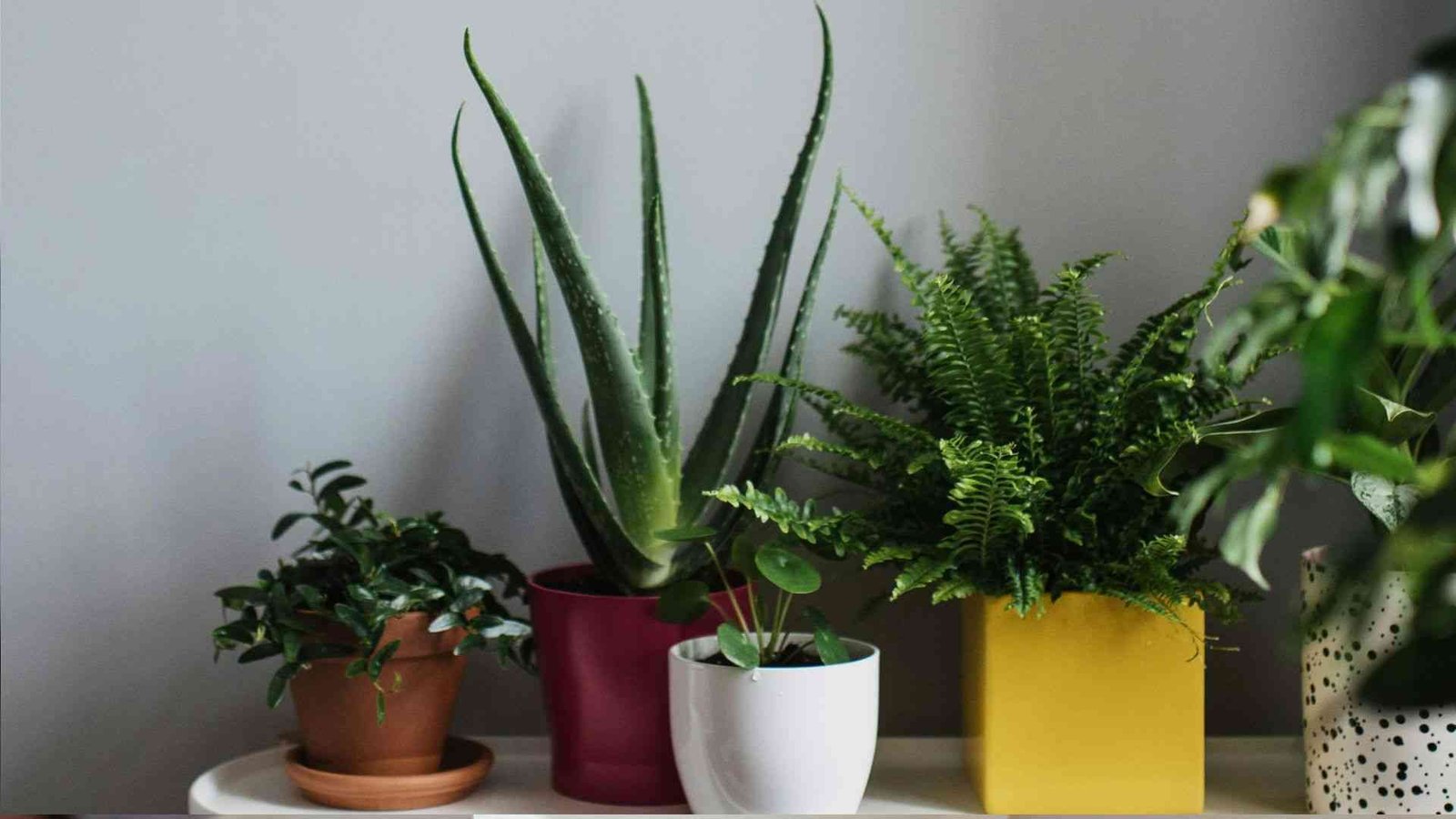
Indoor Plant Setup for Beginners: The Complete Equipment Blueprint
Starting your first indoor plant setup feels simple.
You buy a plant.
You place it somewhere nice.
You water it occasionally.
Then something unexpected happens.
The leaves start stretching.
Growth slows down.
Edges turn yellow.
Soil stays wet too long — or dries too quickly.
Most beginners think:
“I must be bad at plant care.”
But in reality, the issue isn’t care.
It’s setup.
Indoor plants depend entirely on the environment you create. Unlike outdoor plants, they don’t control their light exposure, airflow, humidity, or soil conditions.
Your indoor plant setup determines everything.
And that setup is built using equipment.
Not expensive equipment.
Not complicated equipment.
But the right equipment.
This guide will walk you through the complete indoor plant setup for beginners — step by step — covering every essential category:
- Grow lights
- Pots and planters
- Soil and fertilizers
- Humidity control
- Care tools
- Smart buying decisions
By the end, you’ll understand how to build a stable indoor plant environment that supports healthy growth year-round.
Let’s begin with the most important factor.
1️⃣ Lighting: The Foundation of Every Indoor Plant Setup
If you fix only one part of your indoor setup, fix lighting.
Light drives photosynthesis.
Photosynthesis drives growth.
Without proper light:
- Plants stretch toward windows
- Stems weaken
- Leaves shrink
- Growth slows dramatically
Many homes do not provide sufficient natural light — especially apartments, north-facing rooms, or winter seasons.
That’s why grow lights are often the backbone of a beginner indoor plant setup.
Understanding Natural vs Supplemental Light
Natural window light varies:
- South-facing windows → strong
- East-facing → moderate
- North-facing → low
Most beginners overestimate how much light their room actually receives.
If your plant sits:
- More than 5–6 feet from a window
- In a corner
- In a shaded area
It likely needs supplemental lighting.
Types of Grow Lights for Beginners
For small indoor setups, there are four main types:
🔆 Clip-On Grow Lights
Best for:
- Single desk plants
- Small decorative setups
Compact and easy to install.
💡 Grow Light Bulbs
Best for:
- Replacing regular bulbs
- Clean-looking setups
They fit into standard lamps and provide focused light.
🌿 LED Strip Lights
Best for:
- Shelves
- Plant racks
Provide even horizontal coverage.
🟢 Compact LED Panels
Best for:
- Dedicated plant corners
- Stronger growth goals
More powerful, but not always necessary for casual setups.
How Much Light Do Beginners Actually Need?
For most small indoor plants:
- 10–20 watts → 1–2 plants
- 20–40 watts → small group
- 80+ watts → larger setup
Light duration:
12–16 hours per day
With consistent timing.
The goal is not maximum brightness.
The goal is consistent, appropriate intensity.
Lighting is the foundation of a successful indoor plant setup for beginners.
But lighting alone is not enough.
Next comes something equally important — and often overlooked.
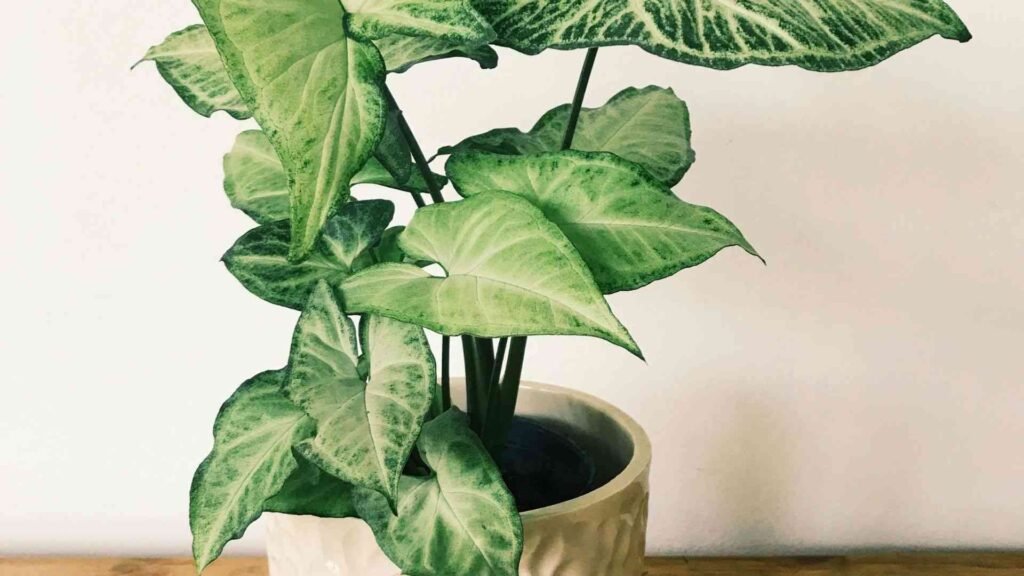
2️⃣ Pots & Planters: Where Root Health Begins
Many beginners choose pots based on appearance.
But pots directly affect:
- Drainage
- Root oxygen levels
- Water retention
- Plant stability
The container is not just decorative.
It’s part of the plant’s life support system.
Drainage Is Non-Negotiable
The most common beginner mistake:
Buying pots without drainage holes.
Without drainage:
- Water accumulates
- Roots suffocate
- Rot begins
Always choose:
✔ Pots with drainage holes
✔ Or decorative pots with inner nursery containers
Healthy roots require oxygen.
Choosing the Right Pot Size
Another mistake:
Upsizing too quickly.
Small plants in oversized pots:
- Retain excess moisture
- Develop slow root growth
- Risk fungal issues
A good rule:
Increase pot diameter by 1–2 inches when repotting.
Gradual size upgrades promote healthy root expansion.
Self-Watering Pots: Are They Good for Beginners?
Self-watering pots can be helpful — but only if understood.
They:
- Reduce watering frequency
- Maintain consistent moisture
But they can also:
- Stay too wet for low-water plants
- Encourage overwatering
They are best for:
- Herbs
- Medium moisture plants
- Busy schedules
Not ideal for succulents.
A successful indoor plant setup for beginners balances light and container design.
But what goes inside the pot matters even more.
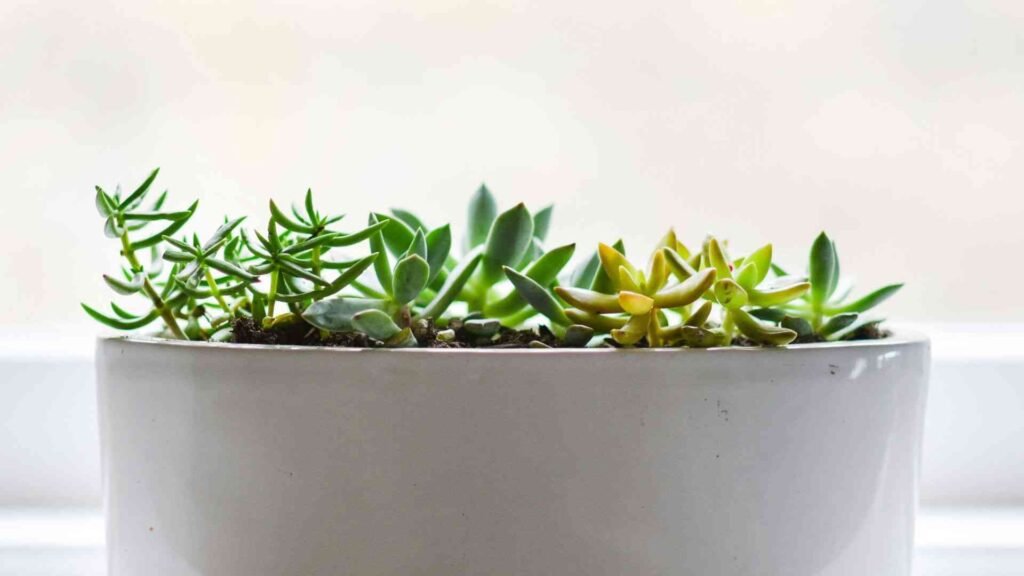
3️⃣ Fertilizers & Soil: The Hidden Engine of Plant Growth
Lighting helps plants produce energy.
But soil and nutrients determine how that energy gets used.
Many beginners believe soil is just “dirt.”
It isn’t.
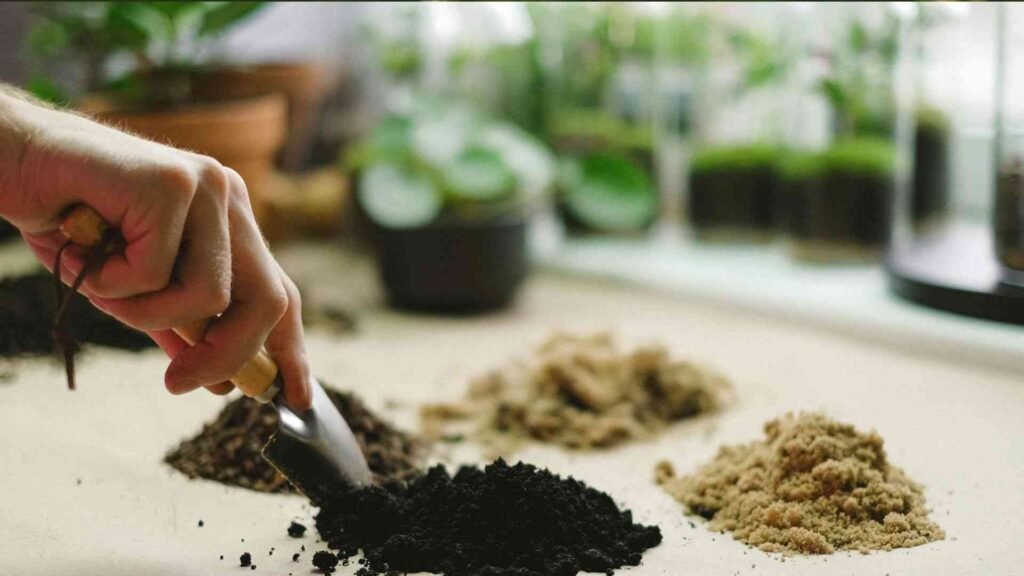
Good potting soil is a carefully balanced medium designed to:
- Retain moisture
- Drain excess water
- Provide oxygen to roots
- Deliver nutrients gradually
If lighting is the foundation of your indoor plant setup for beginners, soil is the engine.
Why Regular Garden Soil Does Not Work Indoors
Outdoor soil:
- Compacts inside pots
- Drains poorly
- Harbors pests
- Lacks proper aeration
Indoor plants need potting mix — not backyard soil.
A proper indoor potting mix typically includes:
- Peat moss or coco coir (moisture retention)
- Perlite or pumice (aeration)
- Compost or organic matter (nutrients)
Each component serves a purpose.
Matching Soil to Plant Type
Not all indoor plants require the same soil texture.
🌿 General Houseplants
Examples: pothos, philodendron, peace lily
Use:
Well-draining all-purpose potting mix.
🌵 Succulents & Cacti
Require:
Fast-draining soil with extra perlite or sand.
Too much moisture leads to rot.
🌱 Herbs
Need:
Moisture-retentive but aerated soil.
Herbs dislike soggy conditions but need consistent hydration.
Choosing the right soil prevents 70% of beginner plant problems.
Understanding Fertilizers (Without Overcomplicating It)
Indoor plants do not receive nutrients from rain, soil ecosystems, or decomposing organic matter like outdoor plants.
Over time, nutrients in potting mix deplete.
That’s where fertilizer comes in.
What Fertilizer Actually Does
Fertilizer supplies three primary nutrients:
N – Nitrogen → Leaf growth
P – Phosphorus → Root development
K – Potassium → Overall strength
You’ll see ratios like:
10-10-10
20-20-20
These numbers represent nutrient balance.
For beginners:
Balanced fertilizer is safest.
Liquid vs Granular Fertilizer
Let’s simplify this.
💧 Liquid Fertilizer
- Fast absorption
- Easy to control
- Ideal for beginners
Mixed with water and applied during watering.
Best for:
- Regular feeding schedules
- Active growth seasons
🌾 Granular Fertilizer
- Slow-release
- Long-lasting
- Lower maintenance
Mixed into soil and released gradually.
Best for:
- Busy plant owners
- Consistent feeding
For most beginners, liquid fertilizer is easier to manage.
But frequency matters.
How Often Should Beginners Fertilize?
General rule:
During growing season (spring & summer):
Feed every 2–4 weeks.
During fall & winter:
Reduce or pause feeding.
Over-fertilizing causes:
- Salt buildup
- Leaf burn
- Stunted growth
Less is often better.
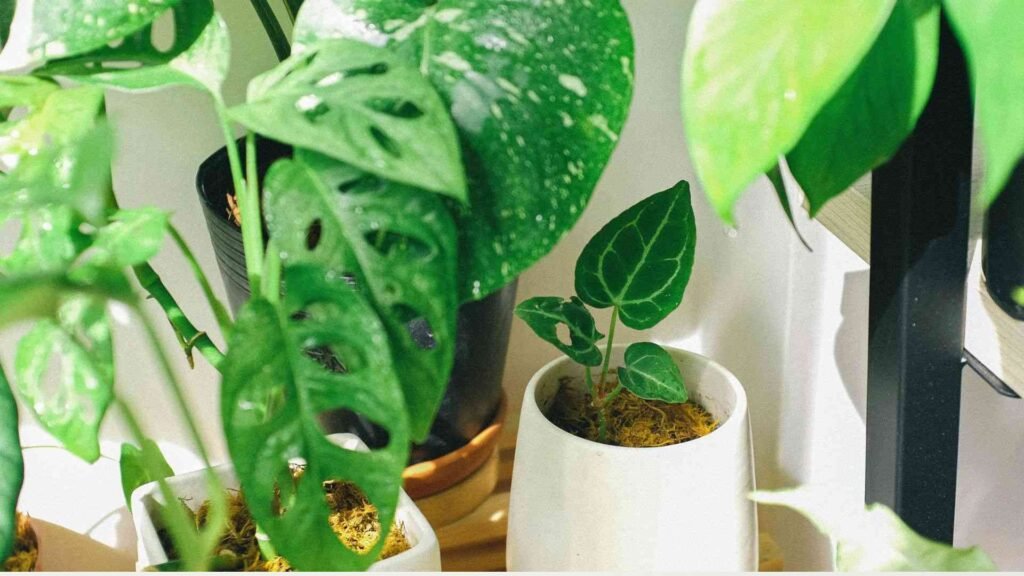
4️⃣ Humidity & Environment: The Overlooked Growth Factor
Lighting and soil get attention.
Humidity does not.
But many indoor plants originate from tropical climates.
Indoor air — especially in apartments — can be dry.
Dry air leads to:
- Brown leaf edges
- Curling tips
- Slow growth
- Dropping leaves
Understanding humidity is essential in a complete indoor plant setup for beginners.
Ideal Humidity Levels
Most common houseplants thrive in:
40%–60% humidity.
Many homes fall below that — especially in winter.
Signs Your Plant Needs Higher Humidity
- Crispy leaf tips
- Browning edges
- New leaves failing to unfurl properly
Before increasing watering, check humidity.
Dry air is often mistaken for under-watering.
How to Increase Humidity (Beginner-Friendly Methods)
You don’t need a greenhouse.
Simple solutions work.
💧 Humidifiers
Most effective option.
Benefits:
- Consistent humidity
- Adjustable levels
- Good for multiple plants
Best for:
- Tropical plant collections
- Bedrooms or plant corners
🪴 Grouping Plants Together
Plants release moisture through transpiration.
Clustering plants increases localized humidity.
Low-cost and effective.
🌊 Pebble Trays
Place pot on a tray with water and pebbles.
As water evaporates, humidity increases slightly.
Best for:
- Small setups
- Supplementary moisture
🚿 Bathroom Placement
If lighting allows, bathrooms often have higher humidity.
However, always consider light requirements first.
Air Circulation Matters Too
Stagnant air can:
- Encourage mold
- Invite pests
- Slow drying soil
Basic airflow from:
- Open windows
- Ceiling fans
- Gentle air movement
Prevents moisture buildup.
Temperature Stability
Most indoor plants prefer:
65°F–75°F (18°C–24°C)
Avoid:
- AC vents blowing directly
- Heaters near plants
- Cold drafts
Stable environment = stable growth.
5️⃣ Care Tools & Accessories: The Tools That Make Everything Easier
Lighting, soil, and humidity create the environment.
But daily care determines long-term success.
Many beginners underestimate tools. They think:
“I just need a plant and water.”
But small tools prevent big problems.
A well-equipped indoor plant setup for beginners includes a few essential maintenance tools that make plant care easier, cleaner, and more consistent.
Why Tools Matter More Than You Think
Without proper tools, beginners often:
- Overwater
- Damage roots during repotting
- Tear stems while pruning
- Make messy soil changes
- Skip maintenance due to inconvenience
The right tools remove friction.
And when plant care feels easy, consistency improves.
Essential Care Tools for Beginners
Let’s break this down into core categories.
✂️ Pruning Shears (Sharp, Clean Cuts Matter)
Why they matter:
Using kitchen scissors or dull blades can:
- Crush plant tissue
- Introduce infection
- Slow healing
Proper pruning shears:
- Make clean cuts
- Reduce plant stress
- Promote healthy regrowth
Best used for:
- Removing dead leaves
- Controlling growth
- Shaping plants
A small, sharp pair is enough for beginners.
💧 Watering Can with Narrow Spout
Watering directly from bottles often causes:
- Soil displacement
- Uneven watering
- Overwatering
A narrow spout watering can:
- Directs water to soil only
- Prevents splashing
- Improves control
Control is critical in small indoor setups.
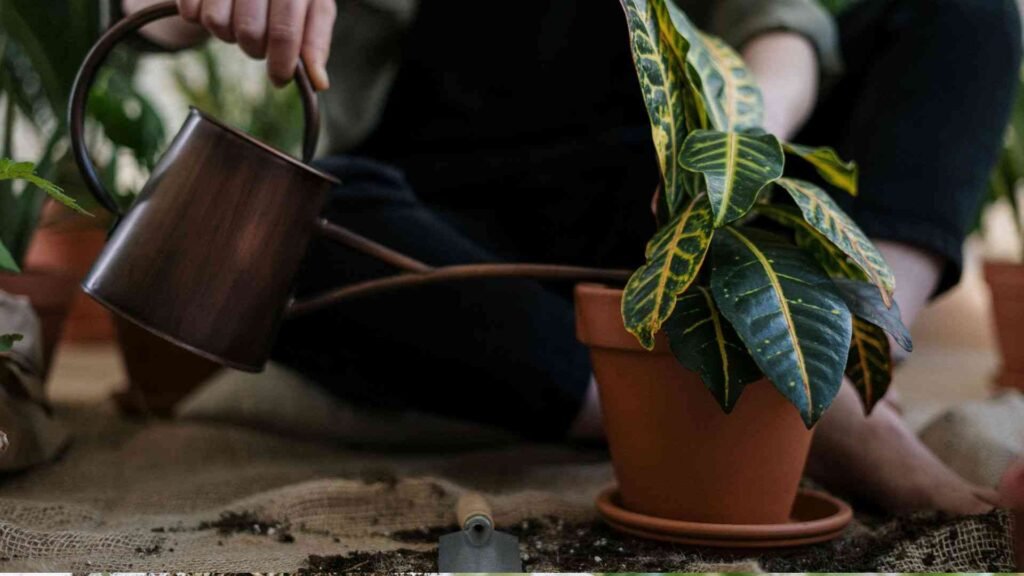
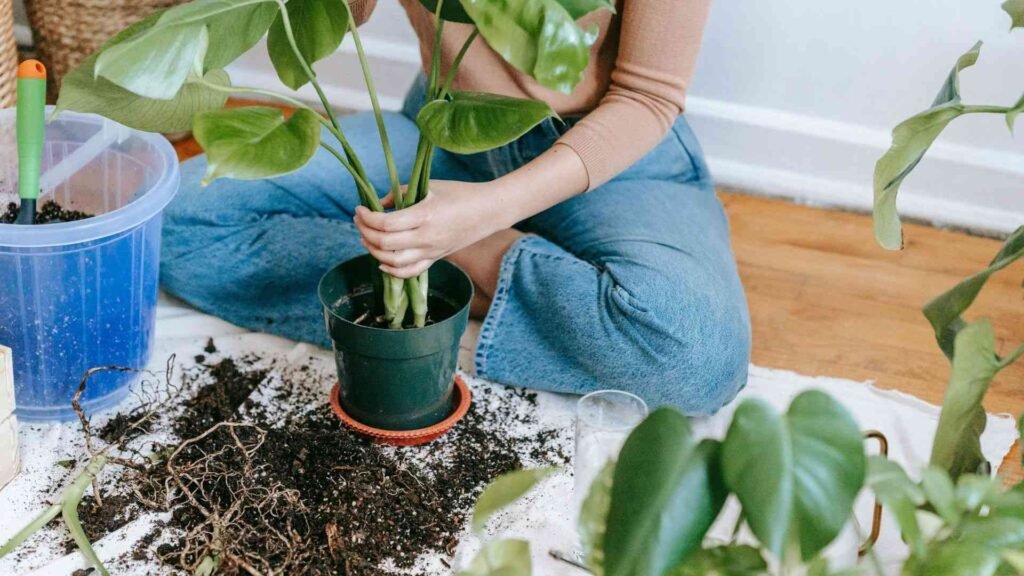
🌱 Soil Scoop & Repotting Tools
Repotting without tools can become messy fast.
Basic repotting kit includes:
- Soil scoop
- Small trowel
- Root loosening tool
These prevent root damage and reduce stress during transplanting.
Repotting should feel controlled, not chaotic.
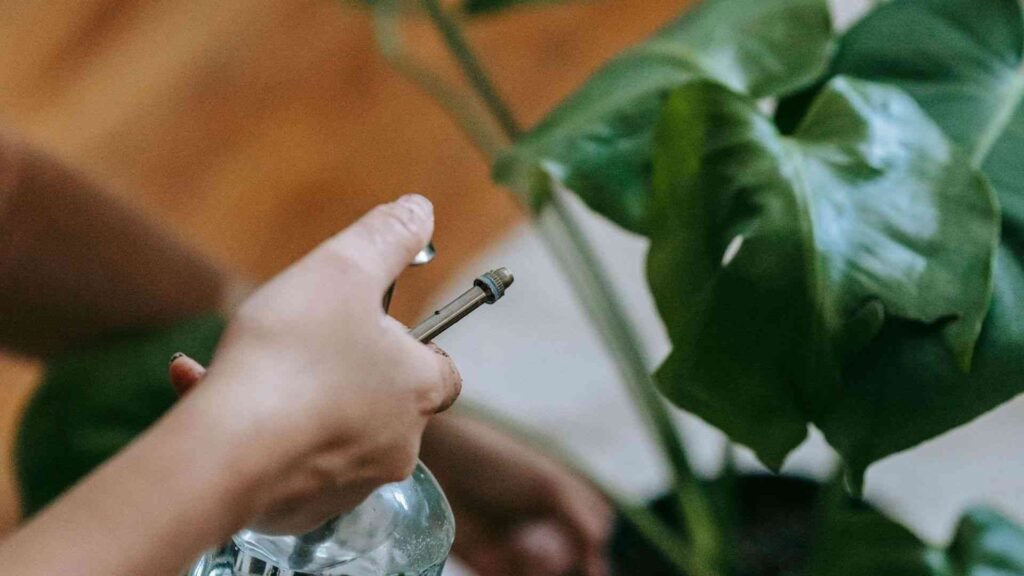
🧴 Spray Bottle (For Misting & Cleaning)
While misting doesn’t dramatically raise humidity long-term, it helps:
- Clean dust from leaves
- Lightly refresh tropical plants
- Remove minor pests
Dust buildup reduces light absorption.
Clean leaves photosynthesize better.
🧼 Potting Mat
One overlooked beginner essential.
Indoor repotting without a mat leads to:
- Soil spills
- Messy floors
- Frustration
A simple waterproof mat makes maintenance cleaner and more enjoyable.
Optional but Helpful Tools
As your indoor plant setup grows, consider:
- Moisture meter
- Light meter
- Digital hygrometer
These are not mandatory — but they reduce guesswork.
For beginners unsure about watering, a moisture meter can prevent overwatering disasters.
Creating a Maintenance Routine
Tools alone don’t create success.
Consistency does.
A beginner-friendly weekly routine:
✔ Check soil moisture
✔ Inspect leaves for discoloration
✔ Rotate plants for even growth
✔ Clean dust from foliage
✔ Adjust grow light distance if needed
When care becomes structured, plants respond with stability.
6️⃣ Comparisons & Smart Buying Strategy: Avoiding Costly Beginner Mistakes
This category separates random buyers from smart beginners.
An indoor plant setup for beginners doesn’t require the most expensive gear.
It requires correct choices.
Let’s break down key comparisons.
Grow Lights: Cheap vs Premium
Cheap grow lights often:
- Exaggerate wattage
- Provide uneven spectrum
- Have short lifespan
Premium options:
- Offer consistent output
- Have better heat management
- Last longer
But expensive doesn’t always mean necessary.
For one desk plant:
A $30–$40 clip light is enough.
For 8 herbs on a shelf:
Invest in better strip lighting.
Match equipment to scale.
Plastic Pots vs Ceramic Pots
Plastic:
✔ Lightweight
✔ Retains moisture longer
✔ Affordable
Ceramic:
✔ Aesthetic
✔ Stable
✔ Often dries faster
Beginners who overwater may benefit from breathable ceramic pots.
Busy beginners may prefer plastic with drainage control.
Liquid vs Granular Fertilizer
Liquid:
✔ More control
✔ Faster effect
✔ Adjustable strength
Granular:
✔ Slow release
✔ Lower maintenance
✔ Less frequent feeding
If you enjoy routine care → liquid works well.
If you prefer minimal effort → granular is safer.
Self-Watering Pots vs Traditional Pots
Self-watering pots:
✔ Reduce watering frequency
✔ Stabilize moisture
But they can:
✖ Stay too wet
✖ Encourage root rot if misused
They work best for:
- Medium moisture plants
- Consistent indoor climate
Not ideal for succulents.
Budget Strategy for a Complete Beginner Setup
Let’s build a realistic equipment budget.
Minimal Beginner Setup ($80–$120 Range)
Includes:
- Clip-on grow light
- Proper pot with drainage
- Quality potting mix
- Liquid fertilizer
- Pruning shears
- Watering can
This is enough for 2–3 indoor plants.
Moderate Beginner Setup ($150–$250 Range)
Includes:
- Multi-head grow light or LED strips
- Decorative + functional pots
- Soil blends for different plant types
- Fertilizer system
- Basic humidity control
- Full care tool kit
Suitable for 5–8 plants.
Example Indoor Plant Setup Blueprints
Let’s create practical scenarios.
Blueprint 1: Small Apartment Desk Setup
- 1 pothos
- Clip grow light
- Plastic pot with drainage
- Balanced liquid fertilizer
- Small pruning shears
Total footprint: Minimal
Maintenance: Low
Ideal for beginners.
Blueprint 2: Bookshelf Plant Collection
- 5 small plants
- LED strip lighting
- Mixed pot materials
- Monthly fertilizer schedule
- Humidity tray
More structured, but manageable.
Blueprint 3: Dedicated Indoor Plant Corner
- Compact LED panel
- 8–10 small plants
- Mixed soil types
- Humidifier
- Full care kit
Higher investment, higher growth results.
How Every Part of an Indoor Plant Setup Works Together
An indoor plant setup for beginners is not built from isolated pieces.
Lighting alone cannot fix poor soil.
Good soil cannot compensate for poor drainage.
Humidity cannot replace proper watering habits.
Tools cannot solve incorrect environmental balance.
Everything is connected.
Understanding how these categories work together is what separates struggling beginners from confident indoor growers.
Let’s connect the system.
Lighting + Pots: Why Drainage Changes Light Needs
Most beginners think lighting is independent.
It isn’t.
The amount of light your plant receives directly affects how quickly soil dries.
Here’s how:
More light → Faster photosynthesis → Faster water usage
Less light → Slower growth → Slower soil drying
Now connect that to pots.
If you place a plant in:
- A plastic pot (retains moisture longer)
- In a low-light corner
You increase the risk of overwatering.
But if you use:
- A ceramic pot
- Under strong grow lights
The soil may dry faster than expected.
So when you improve lighting, you must reconsider watering frequency and pot material.
This is why categories cannot operate separately.
Soil + Fertilizer: Why Feeding Depends on Drainage
Healthy soil structure determines how nutrients move.
If soil is compacted:
- Roots receive less oxygen
- Fertilizer salts build up
- Root stress increases
If soil drains properly:
- Nutrients circulate
- Roots expand
- Growth stabilizes
Now add fertilizer.
Liquid fertilizer moves with water.
Granular fertilizer releases slowly over time.
If you have:
- Fast-draining soil → You may fertilize slightly more often
- Heavy moisture-retentive soil → You must fertilize carefully
The interaction between soil type and fertilizer method is critical.
For example:
Succulents in fast-draining soil need light, controlled feeding.
Tropical plants in moisture-retentive soil require balanced but consistent nutrients.
This is why your Fertilizers & Soil category supports your Pots & Planters category directly.
Humidity + Lighting: The Hidden Balance
Lighting increases transpiration.
Transpiration increases moisture loss.
If you increase grow light intensity without monitoring humidity, plants may show:
- Brown edges
- Curling leaves
- Stalled new growth
Now connect this.
High light + Low humidity = stress
Moderate light + Balanced humidity = stable growth
For beginners, this is especially important in winter.
Heaters reduce indoor humidity.
Grow lights increase leaf activity.
If humidity drops too low, leaves dry faster than roots can supply moisture.
So when adjusting lighting, always evaluate environmental moisture.
Your Humidity & Environment category reinforces your Grow Lights category.
Tools + Maintenance: Preventing System Failure
Even with perfect lighting, soil, and humidity, neglect creates issues.
Care tools make maintenance structured.
Example:
Proper pruning improves air circulation.
Better air circulation reduces fungal risk.
Reduced fungal risk protects soil health.
Now connect tools to soil.
When repotting:
- Using proper tools prevents root damage
- Healthy roots absorb nutrients efficiently
- Efficient nutrient absorption improves leaf growth
Your Care Tools category supports:
- Fertilizers & Soil
- Pots & Planters
- Humidity (through leaf cleaning and inspection)
Everything loops back.
Comparisons: The Decision Layer of the System
Your Comparisons & Buying Guides category plays a strategic role.
It helps beginners evaluate:
- LED vs Fluorescent grow lights
- Plastic vs Ceramic pots
- Liquid vs Granular fertilizer
- Self-watering vs Regular pots
These comparisons reduce confusion.
And when confusion decreases, mistakes decrease.
For example:
Choosing between self-watering and regular pots depends on:
- Lighting strength
- Soil type
- Plant species
- Humidity levels
A beginner who understands how categories connect makes better decisions.
Comparisons act as the bridge between theory and purchase.
A Fully Integrated Beginner Setup (Putting It All Together)
Let’s build a complete example.
Imagine a beginner setting up:
- 4 tropical plants
- In an apartment
- With limited window light
Step 1: Install LED strip lights for even shelf coverage.
Step 2: Use breathable pots with drainage holes.
Step 3: Choose balanced, well-draining soil.
Step 4: Apply liquid fertilizer during growth season.
Step 5: Add small humidifier for winter months.
Step 6: Maintain weekly care routine with proper tools.
Notice something.
Each category supports the next.
Lighting increases growth.
Soil supports roots.
Fertilizer fuels leaves.
Humidity stabilizes environment.
Tools maintain health.
Comparisons guide smarter purchases.
This is a complete indoor plant setup for beginners.
Not random gear.
A system.
How This Strengthens Your Indoor Gardening Confidence
When beginners struggle, it’s rarely because they lack effort.
It’s because they lack system thinking.
Once you understand:
- How lighting affects watering
- How pots influence soil behavior
- How humidity affects leaf performance
- How tools maintain consistency
You stop guessing.
And once guessing stops, confidence grows.
Real-World Beginner Scenarios and Long-Term Setup Planning
An indoor plant setup for beginners doesn’t stay the same forever.
Plants grow.
Light needs change.
Seasons shift.
Your collection expands.
Instead of thinking short term, beginners should build a flexible system.
Let’s walk through real-world situations that most new plant owners experience.
Scenario 1: “My Plant Was Fine… Then Winter Came”
This is extremely common.
During spring and summer:
- Natural light increases
- Days are longer
- Growth accelerates
Then winter arrives.
- Days shorten
- Window light weakens
- Indoor air becomes dry
Suddenly:
- Leaves yellow
- Growth stalls
- Soil stays wet longer
Why?
Because lighting decreased and humidity dropped.
Solution framework:
✔ Add supplemental grow light
✔ Reduce watering frequency
✔ Pause fertilizer
✔ Monitor soil moisture carefully
This shows how lighting, humidity, and fertilizer are seasonal tools — not fixed routines.
Scenario 2: “I Added More Plants and Everything Became Complicated”
Many beginners start with one plant.
Then three.
Then seven.
Suddenly, care becomes inconsistent.
This is where structure matters.
Instead of:
Random lights
Random pots
Different soil mixes
You need uniformity.
Group plants by:
- Light requirement
- Watering schedule
- Humidity preference
This simplifies your system.
Example:
Shelf A → Medium light tropical plants
Shelf B → Bright light succulents
Each zone has its own lighting intensity.
This is system thinking in action.
Scenario 3: “My Plant Grows, But Looks Weak”
Weak growth usually indicates:
- Insufficient light
- Poor nutrient balance
- Compact soil
- Inconsistent watering
Beginner solution checklist:
- Increase light intensity slightly.
- Check pot drainage.
- Ensure soil isn’t compacted.
- Apply balanced fertilizer if in growing season.
Small adjustments often restore plant strength quickly.
Scaling Your Indoor Plant Setup Gradually
A strong indoor plant setup for beginners grows in layers.
Layer 1: Basic Survival
- Light
- Drainage
- Proper watering
Layer 2: Stability
- Consistent schedule
- Balanced fertilizer
- Basic humidity awareness
Layer 3: Optimization
- Light adjustment
- Seasonal fertilizer plan
- Structured grouping
- Airflow control
You do not need Layer 3 immediately.
Grow into it.
The Psychology of Beginner Success
Many beginners fail not because of knowledge gaps — but because of overwhelm.
They see advanced grow rooms online and assume they need:
- Expensive panels
- Complex timers
- Full automation
In reality, a strong beginner indoor plant setup is simple.
Clarity beats complexity.
Focus on:
✔ Correct lighting
✔ Proper drainage
✔ Stable watering
✔ Occasional feeding
✔ Clean environment
That’s enough for healthy growth.
Frequently Asked Questions
Now let’s answer detailed questions beginners commonly ask.
These are structured for clarity and SEO depth.
1. What is the most important part of an indoor plant setup for beginners?
Lighting is the most important factor. Without adequate light, even perfect soil and fertilizer cannot compensate. Light drives photosynthesis, which fuels growth. If your indoor space lacks natural sunlight, supplemental grow lighting should be your first investment.
2. How many plants should a beginner start with?
Starting with 1–3 plants is ideal. This allows you to understand watering habits, lighting adjustments, and plant behavior without becoming overwhelmed. Expanding gradually builds confidence and skill.
3. Can I build an indoor plant setup without grow lights?
Yes, but only if your space provides sufficient natural light. South-facing windows with several hours of bright indirect light may be enough. However, many indoor spaces benefit from supplemental lighting, especially in winter.
4. How do I know if my indoor environment is too dry?
Signs of low humidity include brown leaf edges, curling tips, and crispy new growth. A digital hygrometer can help measure humidity levels. Most indoor plants prefer 40%–60% humidity.
5. Do I need different soil for every plant?
Not always. Many common houseplants thrive in general-purpose potting mix. However, succulents and cacti require faster-draining soil, and herbs may benefit from slightly richer blends.
6. How often should I fertilize indoor plants?
During active growth (spring and summer), fertilize every 2–4 weeks using a balanced fertilizer. Reduce feeding during fall and winter when growth naturally slows.
7. Are self-watering pots good for beginners?
They can be helpful for moisture-loving plants or busy schedules. However, they are not ideal for plants that prefer dry soil, such as succulents.
8. Is expensive equipment necessary for success?
No. A simple grow light, proper pot with drainage, good soil, and basic care tools are enough for most beginners. Expensive setups are only needed for larger collections or advanced growth goals.
9. How long does it take to see improvement after fixing setup issues?
Improvements can appear within 2–4 weeks after correcting lighting, watering, or nutrient issues. Plants need time to adjust, so patience is important.
10. What is the biggest mistake beginners make?
Overwatering. This often happens because lighting is insufficient, causing soil to dry slowly. Proper lighting and drainage prevent most beginner failures.
Final Summary: Building a Strong Indoor Plant Setup for Beginners
An indoor plant setup for beginners is not about collecting equipment.
It’s about creating balance.
Lighting fuels growth.
Pots control drainage.
Soil supports roots.
Fertilizer provides nutrients.
Humidity stabilizes the environment.
Tools maintain consistency.
Comparisons guide smart purchases.
When these categories work together, indoor plants thrive.
Start small.
Build gradually.
Adjust seasonally.
Maintain consistently.
With the right structure, indoor plant care becomes simple, enjoyable, and sustainable.